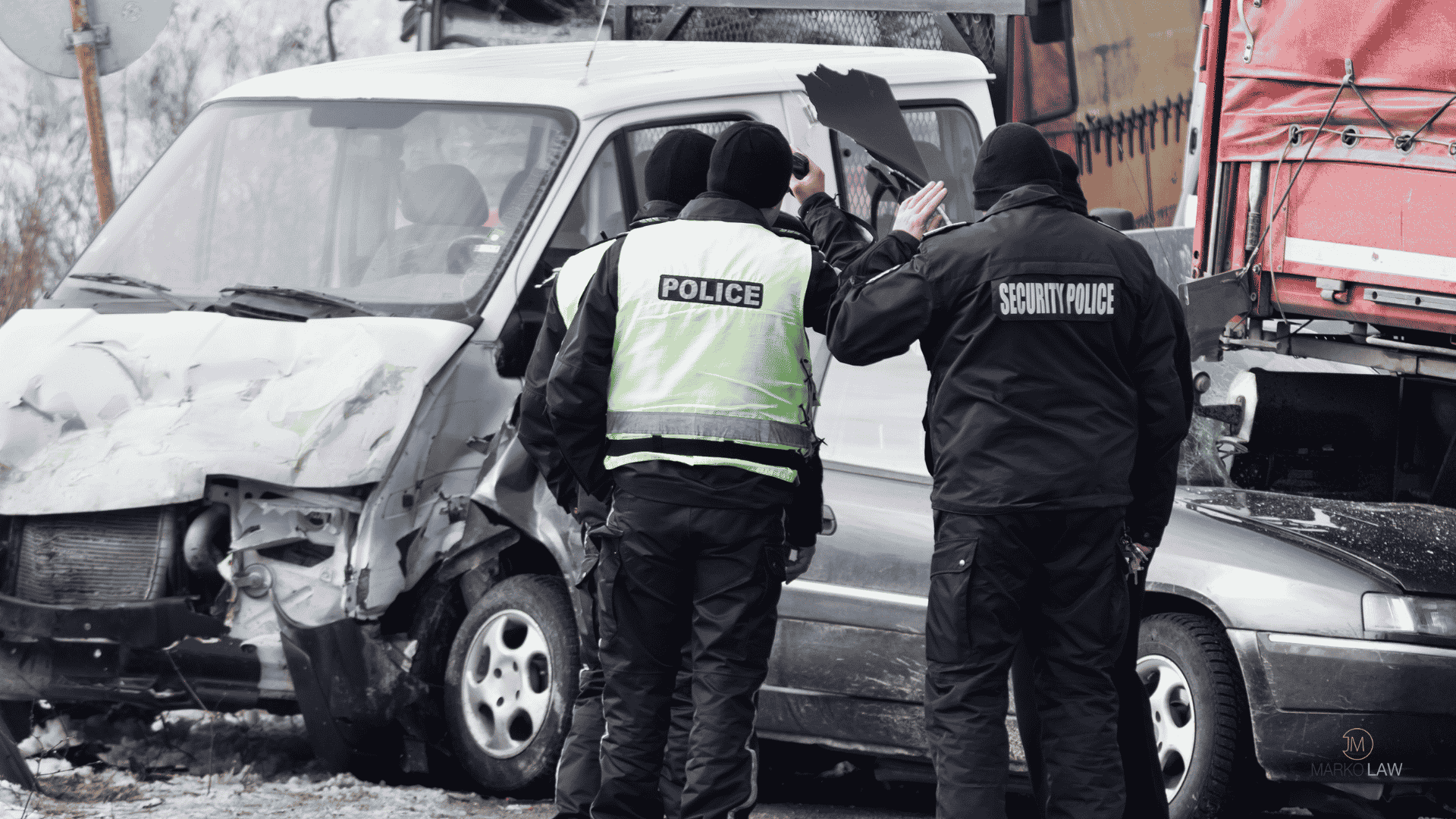
Multi-vehicle truck accidents are some of the most chaotic, traumatic events a person can live through. One moment you're on the road. The next, everything changes. The noise, the confusion, the pain, and then the silence that follows, can leave you completely stunned.
In the days and weeks that come after, a different kind of chaos sets in. Phone calls from insurance companies. Medical appointments. Bills arriving before you've even processed what happened. People offering advice. Nobody giving you a straight answer.
What makes these crashes uniquely complicated is the sheer number of moving parts. When a semi-truck is involved and multiple vehicles are caught in the collision, you're suddenly dealing with multiple insurance companies, potential disputes over who caused what, federal trucking regulations, and a recovery process that can stretch on for months or even years. Knowing what to expect at each stage doesn't make it easy, but it makes it navigable.
The Scene: What Happens Immediately After the Crash
The first hours after a multi-vehicle truck accident set the foundation for everything that follows. Law enforcement will respond, and in serious crashes, that often means multiple agencies: local police, state troopers, and sometimes federal investigators depending on the nature of the cargo or the driver's employer.
At the scene, investigators will document physical evidence that can never be recreated later. Skid marks, vehicle positions, cargo displacement, road conditions. All of it tells a story about what happened. This is also when accident reconstruction may begin, either by law enforcement or by investigators hired by the trucking company.
A few things to keep in mind if you are physically able:
- Call 911 immediately and do not leave the scene
- Get medical attention, even if you feel okay in the moment
- Document what you can: photos of vehicles, the road, any visible injuries
- Get contact and insurance information from all drivers involved
- Do not admit fault or speculate about the cause of the crash
- Do not give a recorded statement to any insurance company without an attorney
Medical Response and Documentation
Get Evaluated, Even If You Feel Fine
Adrenaline masks pain. Internal injuries, traumatic brain injuries, and soft tissue damage often do not show up immediately. People walk away from serious crashes feeling shaken but okay, only to develop debilitating symptoms days later.
Seeking medical care right away does two things. It protects your health. It also creates a documented record that connects your injuries directly to the crash. That is something insurance companies will look for and try to undermine if there is a gap.
Keep Everything
From the moment you leave the accident scene, start keeping records.
- Emergency room and follow-up visit summaries
- Prescriptions and treatment plans
- Bills and explanation of benefits documents
- A personal journal documenting your pain levels, limitations, and how the injury is affecting your daily life
The Investigation: Who Is Looking Into the Crash
Law Enforcement and State Agencies
Police and state troopers will file a crash report. Depending on the severity, the Michigan State Police or federal agencies may conduct their own investigation, particularly if the truck was carrying hazardous materials or if there is reason to believe federal safety regulations were violated.
The Trucking Company's Team
Almost immediately after a serious crash, the trucking company's lawyers and insurers will begin building their defense. They will send investigators to the scene, pull internal records, and begin assessing liability. Time is not on their side if they have something to hide, which is exactly why victims need to move quickly too.
Independent Experts
A qualified trucking accident attorney will bring in independent accident reconstructionists, engineers, and other specialists to analyze the evidence from your side. These experts can counter the trucking company's narrative and help establish what actually caused the crash.
Identifying All Liable Parties
This is one of the most complex aspects of any multi-vehicle truck accident. Liability rarely lands on one person alone.
Potentially responsible parties may include:
- The truck driver. Fatigue, distraction, impairment, or traffic violations may have contributed to the crash.
- The trucking company. Employers can be held responsible for negligent hiring, inadequate training, unrealistic delivery schedules, or pressure on drivers to ignore hours-of-service rules.
- Cargo loaders. Improperly loaded or secured freight can cause a truck to tip, jackknife, or spill, creating hazards for everyone on the road.
- Vehicle or parts manufacturers. Brake failures, tire blowouts, and other mechanical failures may trace back to a defective product.
- Other drivers. In a pileup, the actions of other motorists may have contributed to or worsened the crash.
Insurance Coverage in Multi-Vehicle Truck Crashes
Commercial Policies vs. Personal Auto Policies
Commercial trucking policies carry much higher limits than standard auto insurance, sometimes in the millions of dollars. But more coverage does not mean easy access to it. The insurers behind these policies are sophisticated, well-funded, and experienced in minimizing payouts.
In a multi-vehicle crash, you may be dealing with several insurers at once: the trucking company's carrier, the other drivers' insurers, and your own. Each one has adjusters assigned to protect their company's bottom line.
Michigan's No-Fault Rules
Michigan operates under a no-fault insurance system, which means your own insurance covers certain benefits regardless of who caused the crash. However, no-fault benefits in Michigan have changed significantly in recent years, and understanding how they interact with a trucking claim requires careful analysis.
A few things to understand early:
- Do not give recorded statements to any insurer without speaking to an attorney first
- Accepting an early settlement offer can permanently close your claim, often for far less than your case is worth
- Insurance adjusters may seem sympathetic but they are not on your side
Building the Legal Case
The Evidence That Matters Most
Trucking accidents generate a specific category of evidence that does not exist in standard car crash cases. An experienced truck accident attorney will move quickly to preserve and obtain:
- Electronic logging device (ELD) data showing hours of service and driver activity
- Black box or event data recorder (EDR) data capturing speed, braking, and other vehicle behavior in the moments before the crash
- Driver qualification files including licensing, training records, and employment history
- Vehicle maintenance and inspection logs
- Cargo manifests and loading documentation
- Dashcam or surveillance footage
- Drug and alcohol testing results
FMCSR Violations
The Federal Motor Carrier Safety Regulations (FMCSR) set the rules that govern commercial trucking. Violations of these regulations, whether related to hours of service, vehicle maintenance, driver qualifications, or cargo securement, can be powerful evidence of negligence.
Expert Witnesses
Complex truck accident cases almost always require expert testimony. Accident reconstructionists, trucking industry safety experts, medical professionals, and economists may all play a role in establishing what happened and what it is worth.
The Claims and Litigation Process
Claims vs. Lawsuits
Most cases begin with an insurance claim. Your attorney will submit a demand package to the relevant insurers that lays out the evidence, your injuries, and the compensation you are seeking. In many cases, negotiations result in a settlement without going to court.
When insurers refuse to offer fair compensation, filing a lawsuit is the next step. In Michigan, the statute of limitations for personal injury claims is generally three years from the date of injury, but there are exceptions and variations depending on the circumstances.
What the Process Looks Like for You
After a lawsuit is filed, both sides enter the discovery phase: exchanging documents, taking depositions, and building their respective cases. As the victim, you may be asked to:
- Sit for a deposition (answering questions under oath)
- Undergo an independent medical examination requested by the defense
- Provide documentation of your losses and medical history
The Road Ahead
A multi-vehicle truck accident does not just damage vehicles. It disrupts everything. Careers, relationships, finances, and physical health can all take a serious hit, and the legal process that follows can feel like yet another burden placed on top of an already impossible situation.
Michigan has strong laws protecting accident victims, and the federal regulatory framework governing the trucking industry creates real accountability when those rules are broken. The system can work for you, but only if you have someone in your corner who knows how to use it.
Talk to a Truck Accident Attorney Today
If you or someone you love was seriously hurt in a multi-vehicle truck accident, do not wait to get legal help. Evidence disappears. Deadlines apply. And the trucking company's team is already working.
At Marko Law, we have secured some of the largest verdicts in Michigan history, and we are not afraid to take on the insurance companies and trucking corporations that put profits ahead of safety. Your consultation is free, and you pay nothing unless we win.
📞 +1-313-777-7777
📍 220 W. Congress, 4th Floor, Detroit, MI 48226
🌐 markolaw.com
At Marko Law, we fight hard. We don't back down.