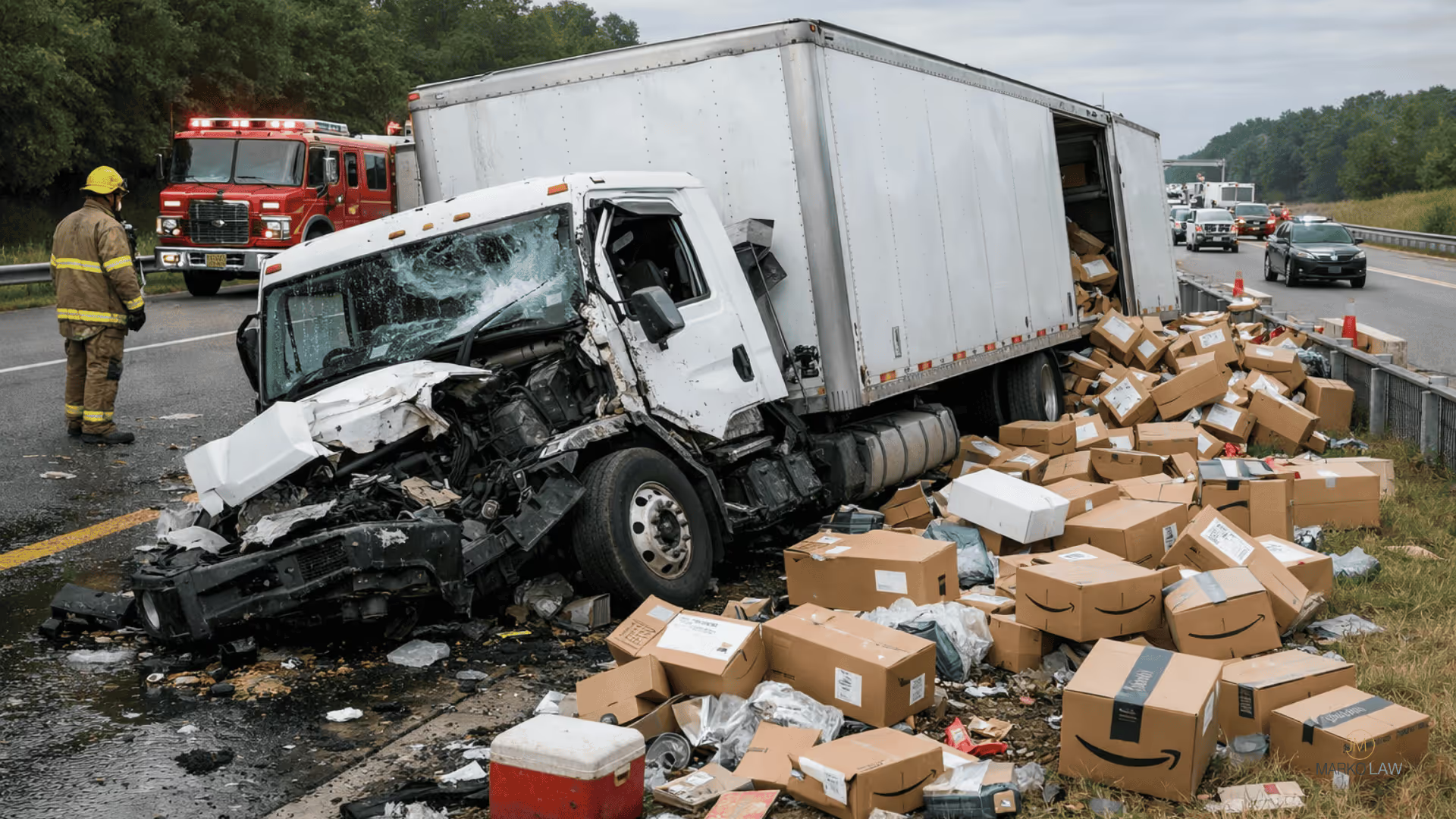
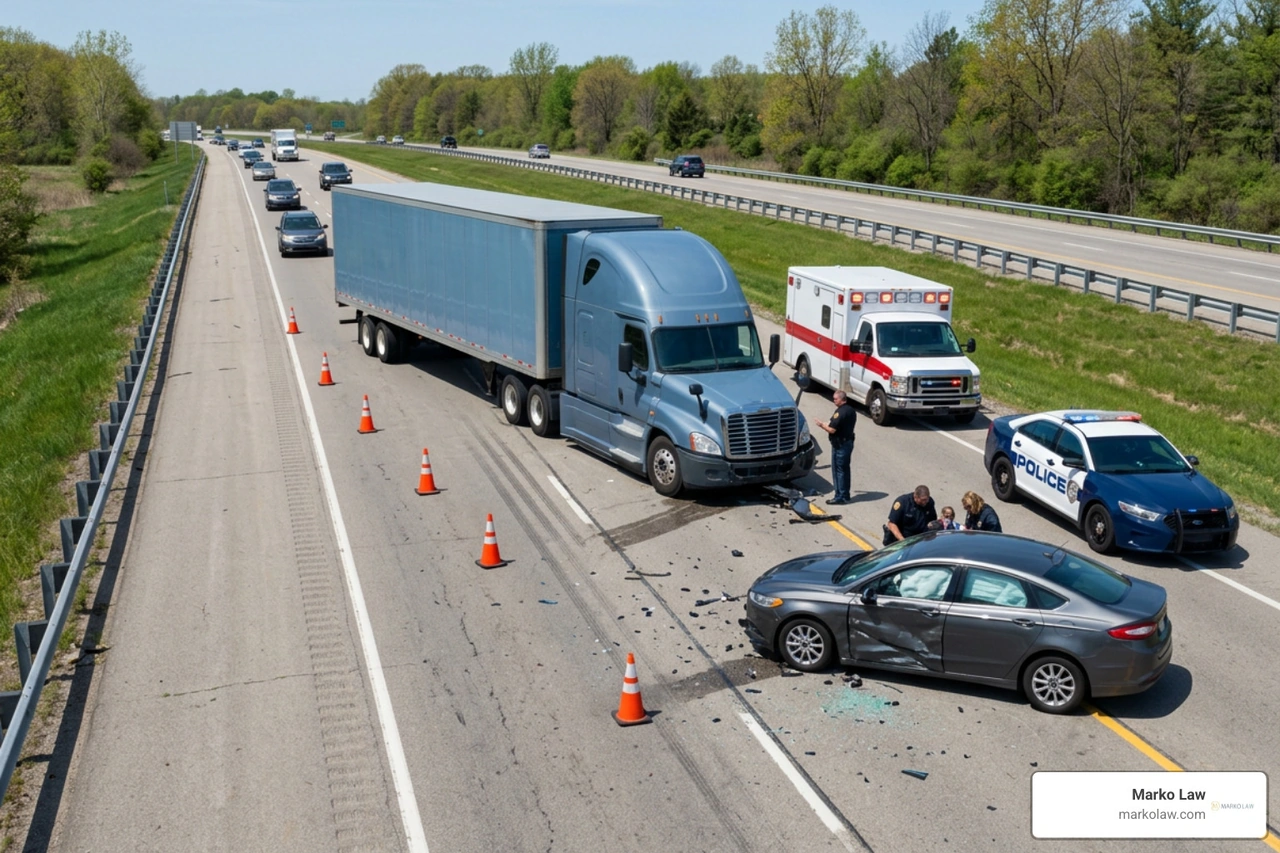
Same-day and next-day delivery has exploded across Detroit. What used to take a week now shows up in hours. Groceries, furniture, medicine, and packages of every size are moving faster than ever—and that convenience comes with a hidden cost.
The danger isn’t playing out on freeways. It’s unfolding on neighborhood streets. Residential blocks, side roads, school zones, and downtown corridors have become the front lines for serious crashes involving delivery vehicles racing the clock.
Last-mile delivery collisions hit hardest where people actually live their lives—where kids cross the street, cyclists share the road, and drivers pull out of driveways. These aren’t rare mishaps. They’re a growing safety problem hiding in plain sight.
What Is a “Last-Mile” Delivery—and Why It’s So Dangerous
The Final Leg to Your Door
“Last-mile” delivery is the final stretch of a package’s journey—from a warehouse or distribution hub straight to your doorstep. It’s the most time-pressured part of the process and, increasingly, the most dangerous.
Why Last-Mile Routes Are Different
Unlike long-haul trucking on highways, last-mile drivers operate in dense urban environments. They deal with:
- Tight residential streets
- Parked cars lining both sides
- Frequent stops and sudden starts
- Pedestrians, cyclists, and delivery drop-offs every few feet
Deadlines vs. Reality
Delivery schedules are built for speed, not safety. Drivers are expected to move fast in places that demand caution. That mismatch—between aggressive deadlines and urban reality—is where collisions happen.
Why Delivery Truck Accidents Are Rising in Detroit
E-Commerce and App-Based Delivery Boom
Online shopping and app-based delivery didn’t just increase traffic—they reshaped it. Detroit neighborhoods now see a constant flow of delivery vehicles at all hours of the day.
More Vehicles in Residential Areas
Where streets once handled light local traffic, they now carry box trucks, cargo vans, and leased vehicles running nonstop routes.
Inexperienced or Undertrained Drivers
Many last-mile drivers are new, rushed into service with minimal training. They’re handed unfamiliar routes, large vehicles, and strict performance metrics—then told to move faster.
Algorithm-Driven Pressure
Delivery quotas aren’t set by people watching the road. They’re set by algorithms measuring scans per hour, stops per minute, and route completion times. That pressure encourages:
- Speeding
- Rolling stops
- Unsafe backing
- Distracted driving while navigating apps
Detroit-Specific Road Challenges
Add in:
- Congested streets
- Ongoing construction zones
- Potholes and uneven pavement
- Snow, ice, and low visibility in winter
The risk multiplies.
Common Types of Last-Mile Delivery Vehicles Involved in Crashes
Box Trucks and Step Vans
Large, heavy vehicles often operated on streets never designed for them. Limited visibility and wide turning radii make them especially dangerous in tight neighborhoods.
Cargo Vans and Sprinter Vans
These vehicles move fast and stop often. Their size makes collisions more severe, especially for pedestrians and cyclists.
Rented or Leased Vehicles
Many drivers use short-term rentals or leased vans, creating confusion after a crash about ownership, insurance, and responsibility.
Unmarked or Third-Party Contractor Vehicles
Some delivery vehicles carry no branding at all. Others belong to subcontractors several layers removed from the company whose package was being delivered—making accountability harder to pin down.
Why These Vehicles Often Evade Scrutiny
After a crash, companies may point fingers:
- “That driver was an independent contractor.”
- “That wasn’t our vehicle.”
- “We don’t control their schedule.”
Who Gets Hurt in Last-Mile Delivery Collisions
Pedestrians in Neighborhoods and Downtown Corridors
Delivery trucks speeding through residential blocks or downtown streets put pedestrians directly in harm’s way. Crosswalks, sidewalks, and curbside drop-offs become danger zones when drivers are rushing to meet quotas.
Bicyclists and Scooter Riders
Cyclists and scooter riders are especially vulnerable. Large vans and box trucks have wide blind spots, and sudden lane changes or door openings can be catastrophic.
Motorists on Residential Streets
Drivers stopped at intersections, pulling out of driveways, or making routine turns are often struck by delivery vehicles that stop suddenly, back unpredictably, or ignore traffic rules to stay on schedule.
Children, Elderly Residents, and People With Disabilities
These are the most at-risk victims. Children walking to school, seniors crossing the street, and people with mobility or vision impairments have less time and ability to react. When a crash happens, the injuries are more likely to be life-altering or fatal.
Why These Injuries Are Often So Severe
Last-mile vehicles are heavier than passenger cars, sit higher off the ground, and strike with greater force. Even low-speed impacts can result in:
- Traumatic brain injuries
- Spinal damage
- Crushed limbs
- Permanent disability
How Last-Mile Delivery Crashes Happen
Illegal Parking and Sudden Stops
Double-parking, stopping in traffic lanes, and blocking bike lanes force dangerous maneuvers by everyone nearby.
Unsafe Backing and U-Turns
Delivery drivers often back into tight spaces or make abrupt U-turns on narrow streets—one of the most common causes of serious pedestrian injuries.
Distracted Driving
Drivers juggle:
- GPS navigation
- Delivery apps
- Scanning packages
- Route updates
Speeding to Meet Delivery Windows
When delivery times are tracked minute-by-minute, safety takes a back seat. Speeding through residential zones becomes routine.
Fatigue From Stacked Routes
Many drivers work long shifts with little rest, especially during peak demand. Fatigue slows reaction time and clouds judgment—right when precision matters most.
Why These Crashes Are More Complicated Than Typical Car Accidents
“Independent Contractor” Labels
Drivers are often classified as contractors, a designation companies use to distance themselves from responsibility—even when they control routes, schedules, and performance metrics.
Layers of Corporate Separation
Large delivery operations rely on:
- Parent companies
- Logistics providers
- Subcontractors
- Fleet operators
Leased or Rented Vehicles
When vehicles are rented or leased, questions arise about:
- Who owned the truck
- Who maintained it
- Which insurance policy applies
Denial of Responsibility
Delivery companies frequently claim:
- The driver wasn’t their employee
- The vehicle wasn’t theirs
- They don’t control how deliveries are made
Why Insurance Disputes Are Common
Multiple insurers may be involved, each trying to limit exposure. Victims often face delays, denials, and lowball offers while companies argue behind the scenes.
Who May Be Legally Responsible for a Delivery Truck Crash
The Individual Driver
If the driver was speeding, distracted, or violating traffic laws, they may be directly liable.
The Delivery Company or Logistics Provider
Companies that set delivery schedules, monitor performance, and profit from speed may share responsibility—even if they label drivers as contractors.
Third-Party Contractors or Fleet Operators
Entities that hire, train, or supervise drivers can be liable for unsafe practices or inadequate oversight.
Vehicle Owners or Leasing Companies
If poor maintenance, faulty brakes, or unsafe equipment played a role, the company that owned or leased the vehicle may be accountable.
Why Liability Often Extends Beyond One Person
Last-mile delivery is a system. When that system prioritizes speed over safety, responsibility doesn’t stop at the steering wheel.
What Evidence Matters Most in Delivery Truck Accident Cases
Driver Logs, Route Data, and App Records
These records can show:
- Speed and timing
- Delivery pressure
- Whether a driver was behind schedule
Vehicle Maintenance and Inspection History
Poor maintenance, worn brakes, or ignored safety issues can shift liability beyond the driver.
Company Policies and Delivery Quotas
Internal rules often reveal how much pressure drivers were under—and whether safety took a back seat to productivity.
Video Footage
Surveillance cameras, dash cams, and doorbell videos can capture:
- The crash itself
- Unsafe driving behavior
- Conditions before and after impact
Witness Statements
Residents, pedestrians, and nearby drivers often see what companies deny. Their accounts can be critical—especially when supported by data or video.
When Speed Becomes a Threat to Public Safety
The rise in delivery truck crashes across Detroit isn’t a coincidence—and it isn’t a series of random mishaps. These collisions are the result of systemic failures: corporate delivery models that reward speed, ignore risk, and push drivers to meet impossible deadlines on streets never designed for that pressure.
If you were injured in a delivery truck crash, don’t take on corporations and insurance companies by yourself. These cases move fast, and the most important evidence—driver data, app records, video, and logs—can disappear quickly if it isn’t preserved.
Marko Law is a trial-first firm with a long record of standing up to powerful defendants. We know how delivery companies operate, how insurers minimize claims, and how to act decisively to protect your rights after a crash.
Contact Marko Law for a Free Case Evaluation
📞 Phone: +1-313-777-7777
📍 Main Office: 220 W. Congress, 4th Floor, Detroit, MI 48226
🌐 Website: https://www.markolaw.com/