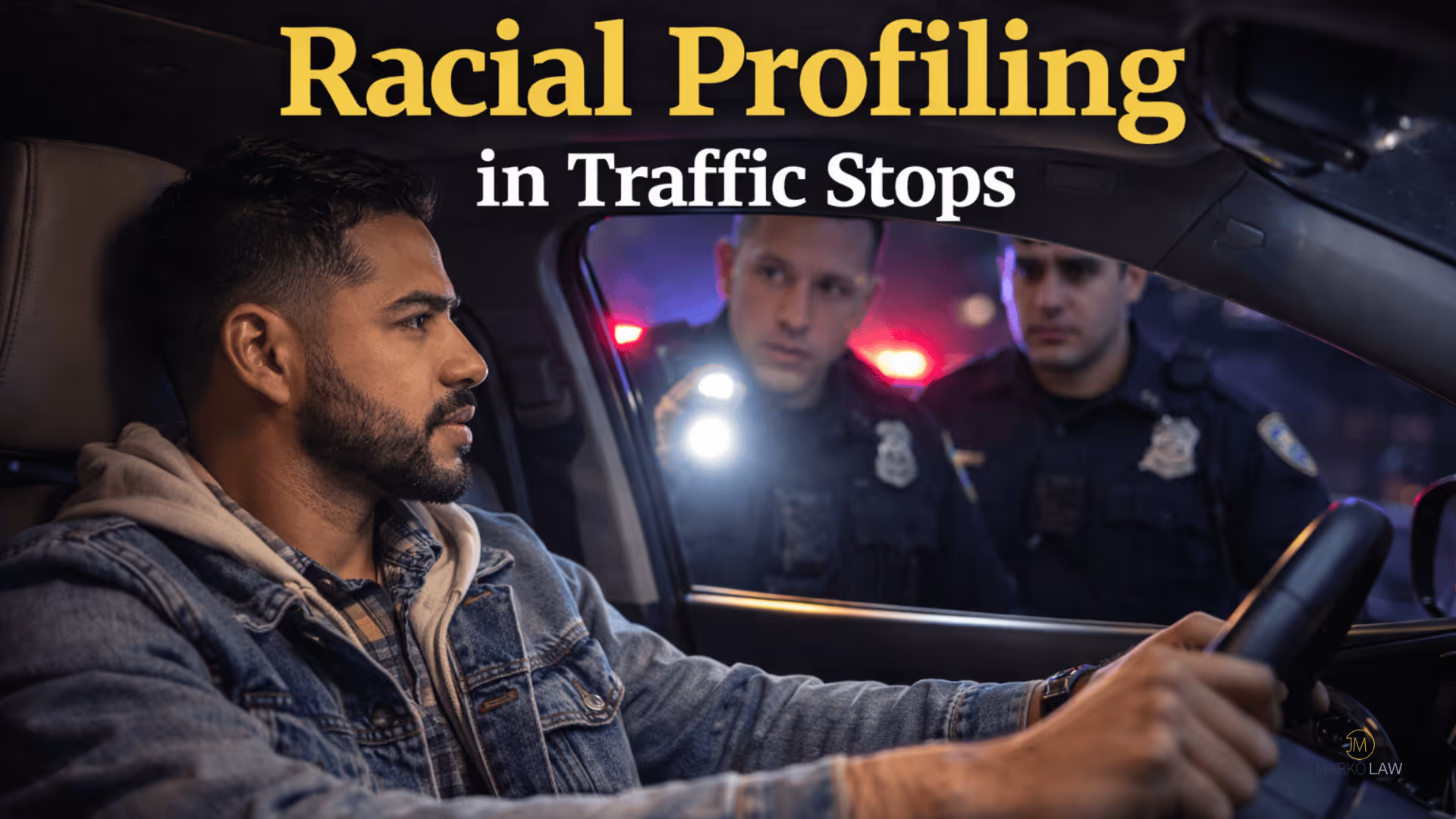
Let’s say it plainly: racial profiling during traffic stops is real, and it still happens—in Michigan, in Metro Detroit, and across the country. For many drivers, a stop that’s supposed to be routine can turn into something else entirely: suspicion without a real reason, questions that don’t match the situation, and escalation that feels targeted.
And the impact isn’t “just uncomfortable.” It’s humiliating. It’s destabilizing. And it can turn dangerous fast. The moment you realize you’re being treated like a threat—because of how you look—your body goes into survival mode. That reaction is normal.
Here’s the priority order that matters: your safety first, then protecting your rights. You don’t have to win an argument on the side of the road. You need to get through the encounter safely—and leave with the ability to hold people accountable later.
Your Rights in a Michigan Traffic Stop
What you must provide
When an officer asks, you generally need to provide:
- Driver’s license
- Vehicle registration
- Proof of insurance
Michigan also allows electronic proof of insurance (on your phone) in a setting where it’s safe for the officer to verify it.
What you generally don’t have to do
- You do not have to consent to a search. Consent is different from a lawful order—and once you “agree,” you may be giving up an important protection.
- You don’t have to answer investigative small talk (“Where are you going?” “Where do you live?” “Do you have anything illegal?”) beyond what’s required to identify yourself and provide documents—especially if it’s turning into interrogation.
Core constitutional protections (no legalese)
- Fourth Amendment: protects you from unreasonable stops, searches, and seizures.
- Fifth Amendment: protects your right to remain silent when questions could incriminate you.
- Fourteenth Amendment (Equal Protection): prohibits race-based selective enforcement—even when a stop might be “technically justified” on paper.
“Reasonable suspicion” vs. “probable cause” (real-life examples)
- Strong indicators vs. vibes: “I smell alcohol,” “I see contraband,” or “that’s an open container” is very different from “you seem nervous” or “I’ve got a feeling.”
- Plain view vs. fishing expedition: something clearly visible can change what the officer can do; “I just want to look around” is not the same thing.
Officers can legally order a driver (and even passengers) out of a vehicle during a lawful stop. That doesn’t mean everything that happens after is legal—but it does mean you should comply physically and fight it legally later.
What To Do During the Stop (Safety First, Rights Second, Receipts Always)
Control what you can control
- Pull over safely. Park. Keep your hands visible.
- Turn on the interior light if it’s dark.
- Speak calmly—even if the officer isn’t.
- Don’t reach for documents until you’re told to (and narrate your movements: “My registration is in the glove box—okay if I grab it?”).
Use simple phrases that don’t escalate
Keep it short. Keep it steady.
- “Officer, I’m going to comply. Can you tell me the reason for the stop?”
- “I do not consent to any searches.”
- “Am I free to go?”
- “I’m invoking my right to remain silent.”
Recording the stop
In Michigan, you can generally record police performing their duties in public as long as you don’t interfere.
Practical tips that protect you:
- Mount your phone—don’t wave it around.
- State the time/location calmly.
- Don’t argue about your right to record on the roadside. Document now. Challenge later.
If the stop escalates
- If you’re ordered out of the car: comply physically (you can contest legality later).
- If force is threatened or used:
- Prioritize survival.
- Say clearly: “I’m not resisting.”
- Request medical help if you need it.
What To Do Immediately After the Stop (This Is Where Cases Are Won)
Write it down while it’s fresh
Pull over somewhere safe and document everything like you’re writing it for a judge who wasn’t there:
- Date/time, exact location, and the reason given for the stop (word-for-word if you can).
- Patrol car number, badge number, and the officer’s name (if you saw it).
- What was said—especially statements referencing race, neighborhood, “fit the description,” or anything that sounds like a stereotype.
- Witness names/contact info (passengers count, too).
Preserve evidence
Treat your evidence like it’s priceless—because it is.
- Save your video and back it up (cloud + a second device if possible).
- Screenshot timestamps, call logs, and any maps/location history you’re comfortable saving.
- Keep the ticket/warning and any paperwork.
- Photograph anything relevant:
- Your vehicle (damage, condition, plates)
- Injuries (even minor bruising)
- Property damage
- Where you were stopped (if safe)
Get official records (FOIA is a power move)
Official records can confirm what happened—or expose what’s missing.
- Michigan State Police (MSP): MSP says the public can request records including body camera, dash camera, and incident reports through their FOIA process/portal.
- Detroit Police Department / local agencies: Detroit’s FOIA page explains what details you’ll need to locate records and lists examples like dash-cam videos and 911/CAD materials that may be available.
Michigan has a “body-worn camera privacy” law that can limit what’s released or require redactions in certain situations, so don’t be surprised if an agency claims exemptions or delays.
Reporting Options in Michigan
Internal Affairs / Professional Standards
- For alleged misconduct by Michigan State Police employees, MSP’s Professional Standards Section handles employee misconduct complaints (and notes it doesn’t supervise other agencies). Complaints can be filed with a local post/district commander or with Professional Standards at headquarters.
Michigan Department of Civil Rights (MDCR)
- MDCR explains that if you believe you were subjected to unlawful discrimination, you can file a complaint—and it highlights a 180-day window in many situations.
U.S. Department of Justice (DOJ) Civil Rights Reporting
- DOJ provides an online reporting system for potential civil rights violations.
What to expect (no sugarcoating)
- Complaints don’t always lead to discipline—even when the community knows what happened.
- Even if an internal process “clears” the officer, your documentation can still support a civil claim. Systems can deny. Evidence doesn’t.
When Racial Profiling Becomes a Civil Rights Case
Situations that may support a claim
- A stop that’s prolonged or escalated without legitimate justification.
- A search without legal basis—or “consent” that was pressured, coerced, or manipulated.
- You’re treated differently than similarly situated drivers (tone, threats, assumptions, enforcement).
- Retaliation for asserting rights (“Now I’m going to make it harder for you…”).
- Excessive force during what should have been a basic traffic encounter.
Common legal pathways (high level)
- 42 U.S.C. § 1983: a federal civil rights law that allows people to sue when someone acting “under color of” state law deprives them of constitutional rights.
- Municipal liability (policy/custom): if you’re suing a city/department—not just an individual officer—courts generally require proof your harm was tied to an official policy, practice, or custom, not just “one bad employee.”
Damages: How This Can Harm You (And Why the Law Can Recognize It)
Emotional and psychological impact
- Anxiety, panic, hypervigilance
- Sleep disruption
- Trauma symptoms and fear of driving—especially at night or in certain areas
Financial impact
- Tickets and fines
- Towing/impound costs
- Missed work, lost income
- Childcare disruptions, transportation costs
Physical harm
- Injuries from force, restraints, takedowns, or unsafe roadside conditions
- Worsening of existing medical conditions due to stress or physical contact
Dignitary harm
- Humiliation
- Being treated like a threat when you’re not
- The lasting message: “You don’t belong here”—even when you do
You’re Not “Overreacting”—You’re Paying Attention
If a traffic stop left you feeling embarrassed, angry, shaken, or unsafe, that doesn’t mean you “handled it wrong.” It doesn’t mean you’re being dramatic. And it definitely doesn’t mean you did something to deserve it.
Fear and anger are normal reactions when you’re treated like a threat for no legitimate reason—especially when the power in that moment is one-sided. Racial profiling doesn’t just violate your rights. It hits your dignity. It changes how you drive, where you go, and how safe you feel in your own community.
Contact Marko Law for a Free Case Evaluation
At Marko Law, we fight hard—and we don’t back down. If you believe you were racially profiled, searched without a real basis, or treated differently because of your race, let’s talk. You deserve answers. You deserve accountability. And you deserve a team that will actually push back.
📞 Phone: +1-313-777-7777
📍 Main Office: 220 W. Congress, 4th Floor, Detroit, MI 48226
🌐 Website: https://www.markolaw.com/