Part of The Most Shocking Civil Lawsuits in American History
It sounded like a strange rumor at first. A wave moving through the streets. Buildings shaking. People screaming. But this was no ordinary disaster. It was a wall of molasses, thick, fast, and deadly.
In 1919, the city of Boston became the site of one of the most bizarre and devastating industrial accidents in American history. A massive storage tank burst without warning, unleashing millions of gallons of molasses into the surrounding neighborhood. Within moments, lives were lost, families were torn apart, and an entire community was left in shock.
What followed was not just a tragedy. It was a legal battle that would redefine accountability. Victims demanded answers. Who was responsible? Could a corporation be held liable for a disaster caused by negligence, even when the science was complex and the defense was aggressive?
At Marko Law, we understand that behind every historic case is a human story. The Molasses Flood lawsuit was not just about an unusual accident. It was about justice, corporate responsibility, and the fight to hold powerful entities accountable when lives are changed forever.
The Disaster That Shocked Boston
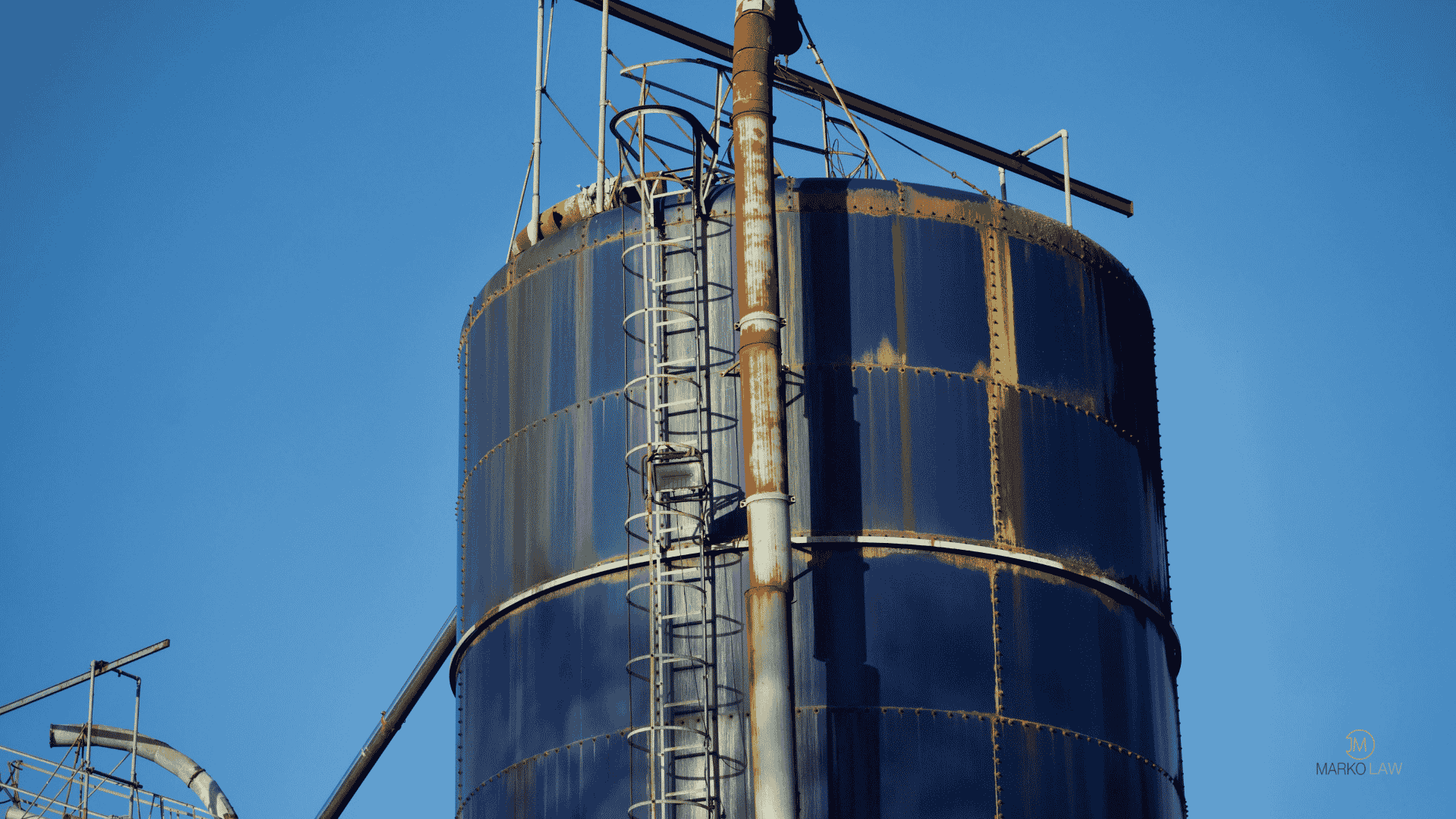
On a cold January day in 1919, Boston’s North End was forever changed. Without warning, a massive steel storage tank owned by the United States Industrial Alcohol Company failed catastrophically.
In an instant, more than two million gallons of molasses surged into the streets.
Witnesses described a powerful wave moving with terrifying speed. It was not slow or sticky at first. It moved like a force of nature, tearing through everything in its path.
The destruction was immediate and overwhelming:
- Buildings collapsed under the pressure
- Streets and rail lines were ripped apart
- Horses, workers, and residents were swept away
Dozens of people were injured. Many lost their lives. Rescue efforts were chaotic, with emergency crews struggling to navigate the thick, suffocating flood.
What Went Wrong: Negligence Behind the Collapse
As investigators began to examine the disaster, a troubling picture emerged. This was not an unavoidable accident. It was a failure built on ignored warnings, poor decisions, and a lack of accountability.
The storage tank itself had serious flaws from the beginning.
- It was poorly constructed and inadequately designed
- Basic engineering standards were not properly followed
- There was little to no meaningful oversight during its construction
Even more alarming, warning signs had been present long before the collapse.
- Residents had reported leaks from the tank
- Workers had raised concerns about its structural integrity
- Instead of addressing these issues, the company chose to ignore them
There were no thorough safety inspections. No meaningful effort to evaluate the risk. Production demands took priority over public safety.
At the center of this case was a core legal principle that still drives personal injury and catastrophic injury lawsuits today. Negligence.
Negligence occurs when a party fails to exercise reasonable care, resulting in harm to others. In this case, the company had a duty to ensure that its storage tank was safe. That duty was not met.
The Legal Battle Begins
In the wake of the disaster, grieving families and injured survivors turned to the legal system for answers. What followed was one of the most complex and groundbreaking lawsuits of its time.
Victims filed claims against the United States Industrial Alcohol Company, alleging that negligence led directly to the collapse. These were not isolated cases. This was a massive legal effort that brought together hundreds of individuals seeking justice.
The scale of the case was unprecedented:
- Hundreds of plaintiffs came forward
- Claims ranged from wrongful death to serious personal injury
- Damages reflected both immediate loss and long term suffering
This type of coordinated litigation would later resemble what we now understand as class action or mass tort cases.
The defense, however, did not accept responsibility. Instead, they pushed back aggressively.
- The company claimed the tank had been sabotaged by anarchists
- They denied that any structural failure was due to negligence
- They attempted to shift blame away from their own decisions
This created a major legal challenge. The burden of proof rested on the victims. They had to show not only that the tank failed, but that the failure was the direct result of the company’s negligence.
The Role of Expert Testimony
One of the most defining aspects of this case was the use of expert testimony. At a time when this approach was still developing, it became the foundation for proving what really happened.
Engineers and scientific experts were brought in to analyze the tank and its failure. Their work focused on uncovering the truth behind the collapse.
- Structural weaknesses in the tank design were identified
- Poor construction practices were examined
- The pressure and stress on the tank were analyzed
This evidence was critical. It transformed the case from speculation into fact based argument.
Expert testimony helped establish key elements of negligence:
- The tank was not built to withstand the forces it encountered
- Warning signs had been ignored
- Proper safety measures were never implemented
Just as important, these experts helped establish causation. They connected the company’s failures directly to the disaster and the harm suffered by victims.
The Court’s Decision and Its Impact
After years of litigation, the court reached a decision that would leave a lasting mark on American law.
The United States Industrial Alcohol Company was found liable for negligence.
This ruling was more than a legal outcome. It was a statement. Corporations could no longer hide behind complexity, deny responsibility, or shift blame without consequence.
The court awarded damages to victims and their families, recognizing:
- The loss of life
- The severity of injuries
- The lasting impact on survivors and their communities
The financial consequences for the company were significant. But the broader impact went far beyond monetary damages.
How the Case Changed Corporate Liability
The Molasses Flood lawsuit did more than resolve a single disaster. It reshaped how courts and the public viewed corporate responsibility.
Before this case, it was easier for companies to deflect blame, especially in complex industrial accidents. After this case, that changed.
The outcome helped strengthen accountability in several key ways:
- Greater responsibility for corporations
Companies were expected to take safety seriously and could no longer ignore risks without consequence - Precedent for large scale injury litigation
This case showed that groups of victims could come together and challenge powerful defendants - Expansion of safety regulations and oversight
Industries began to adopt stricter standards to prevent similar disasters - Emphasis on proper engineering and inspections
The importance of qualified oversight became a central issue in preventing catastrophic failures
The influence of this case can still be seen today. Modern catastrophic injury lawsuits often rely on the same principles. When a company cuts corners or ignores safety, it can be held legally responsible for the harm that follows.
What This Case Teaches Us About Modern Injury Law
The Molasses Flood lawsuit changed how courts view corporate responsibility. It showed that companies cannot ignore safety without consequences. When negligence leads to catastrophic harm, the law must provide a path to accountability.
Today, those same principles apply in cases involving brain injury damages, industrial accidents, and other serious harm. Victims are still forced to fight for recognition, for compensation, and for their future.
At Marko Law, we carry that legacy forward. Our team has secured significant verdicts for individuals facing life changing injuries, including cases involving civil rights violations and catastrophic harm. We understand how to build strong cases, challenge powerful defendants, and pursue full and fair compensation.
Contact Marko Law for a Free Case Evaluation
If you or a loved one has been harmed due to negligence, you do not have to face it alone. Whether your case involves a catastrophic injury lawsuit, unsafe conditions, or corporate misconduct, your rights matter.
Our team at Marko Law has a proven track record of fighting for victims across Michigan and securing meaningful results in complex cases.
Contact Marko Law today for a free, confidential case evaluation:
📞 Phone: +1-313-777-7777
📍 Main Office: 220 W. Congress, 4th Floor, Detroit, MI 48226
🌐 Website: https://www.markolaw.com/