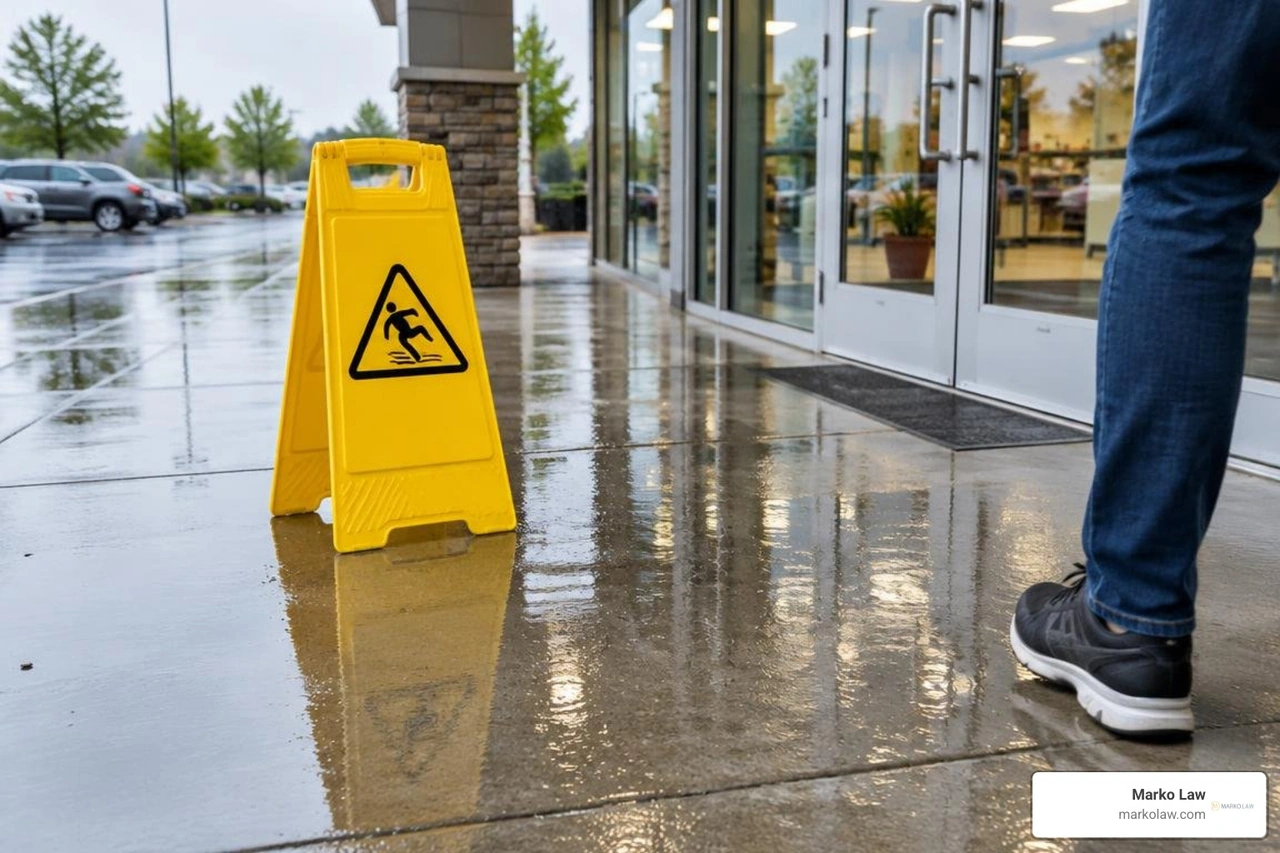
Michigan winters aren’t just cold—they’re unforgiving. Icy sidewalks, packed snow, and heavy applications of sidewalk salt are part of everyday life from December through March. And while salt helps prevent dangerous slips, it also creates its own hazards. Dogs suffer painful paw burns. People slip on uneven, oversalted patches. Walkers face unexpected medical bills. Pet owners are hit with emergency vet costs. A simple winter stroll can turn into an injury that disrupts your entire life.
Sidewalk salt may seem harmless, but the consequences of improper use can be severe—and legally complicated. Who is responsible when a dog’s paws are burned or a person falls on salted ice? Is it the homeowner? The business owner? The city? The answer often depends on sidewalk maintenance, snow-removal practices, and whether the property owner acted reasonably, as Michigan law requires.
Here’s the good news: Michigan law provides strong protections for people and pets harmed by unsafe property conditions. If negligence played a role in your injury—or your pet’s—you may have a claim. And at Marko Law, we fight to uncover the truth and hold the responsible parties accountable.
Who Is Responsible for Sidewalk Maintenance in Michigan?
Homeowners
Homeowners generally have a basic duty to keep sidewalks and walkways on or adjacent to their property reasonably safe. While specific obligations vary from city to city, one rule remains the same:
If a homeowner fails to maintain their sidewalk in a safe condition—and that failure causes injury—they may be held liable.
Even if a city ordinance assigns responsibility to the municipality, homeowners can still be sued under Michigan’s negligence laws if their actions (or inactions) created a hazardous condition.
Businesses
Commercial property owners owe a higher duty of care because customers, delivery drivers, and pedestrians rely on safe access.
Businesses must:
- Properly shovel
- Apply the correct amount of salt
- Check conditions throughout the day
- Make reasonable efforts to prevent ice buildup
When a business overloads the sidewalk with salt, fails to remove snow before salting, or ignores dangerous conditions, it may be responsible for resulting injuries—to people and to pets.
Landlords and Property Managers
In rental properties, responsibility often depends on:
- Lease agreements
- Maintenance contracts
- Common-area duties
But regardless of written agreements, landlords and property managers must keep common walkways, entrances, parking lots, and sidewalks safe. If a tenant or their pet is hurt because of mismanaged salt or snow, the landlord may be held accountable.
Municipalities
Cities and towns maintain some sidewalks and pathways—but suing a municipality is complex. Under Michigan law:
- Municipalities have limited liability.
- They may be responsible for unreasonably dangerous defects, including poorly maintained walkways.
- There are strict deadlines—often as short as 120 days—to give notice of the claim.
When Sidewalk Salt Use Becomes Negligence
Using Too Much Salt
More salt doesn’t mean more safety. Oversalting can:
- Create unstable, gravel-like surfaces
- Lead to slips and twisted ankles
- Damage pets’ paws or skin
Using Too Little Salt
When a property owner doesn’t apply enough salt—or skips salting altogether—they leave behind:
- Slick patches
- Black ice
- Hidden hazards under thin ice layers
Failing to Shovel Before Salting
Salt thrown onto snow instead of shoveled ice will:
- Melt the top layer
- Refreeze into smooth, invisible ice
- Create treacherous black ice conditions
Using Unsafe or Industrial-Strength Chemicals
Some de-icing products are:
- Toxic to pets
- Extremely corrosive
- Strong enough to burn human skin
Failure to Inspect and Maintain
Michigan property owners must regularly check their sidewalks during winter weather.
Negligence occurs when they:
- Don't monitor conditions after storms
- Don’t reapply salt when ice reforms
- Leave hazards unaddressed for unreasonable periods
- Ignore complaints or warnings
Can You Sue If You Are Hurt by Sidewalk Salt?
Premises Liability Basics
Under Michigan premises liability rules, property owners and occupiers must:
- Maintain reasonably safe conditions
- Inspect their property regularly
- Fix hazards they know about—or should know about
- Use salt and snow removal practices that reduce danger, not increase it
If a property owner fails to remove ice, oversalts the walkway, or applies chemicals in a careless way, that behavior may be considered negligence.
Exceptions & Challenges
The “Open and Obvious” Doctrine
Property owners often argue that hazards like ice or visible salt piles were “open and obvious,” meaning a reasonable person should have noticed and avoided them.
However, courts have increasingly recognized exceptions—especially when the condition is unreasonably dangerous or avoidable.
Differences for Residential vs. Commercial Property
Residential homeowners may have different obligations from businesses. Commercial properties generally have a higher duty of care, especially when they invite customers or the public onto their premises.
Can You Recover Damages if Your Pet Is Hurt by Sidewalk Salt?
Veterinary Bills
If your pet experienced chemical burns, poisoning, or other injuries from improperly used salt, you may be able to recover the full cost of:
- Emergency treatment
- Follow-up care or wound management
- Prescription medications
- Specialized treatments for severe burns or ingestion
- Long-term therapies if the injury caused lasting damage
Pain and Suffering for Pets
Michigan law does not treat pets the same way it treats human injury victims. Pets are considered property, which limits the ability to seek traditional “pain and suffering” damages on their behalf.
However:
- If a property owner was negligent
- And that negligence directly caused your pet’s injury
…you may still recover for the economic harm, including vet bills and related expenses.
Property Damage Claims
Because pets are legally categorized as property in Michigan, your claim can include:
- The value of the animal (if the injury is severe or fatal)
- Medical costs related to the injury
- Associated expenses, such as emergency boarding or transportation
Evidence That Strengthens a Salt-Related Injury Claim
Photographs
Photos are some of the most powerful pieces of evidence in a winter injury case. Capture:
- The sidewalk conditions where the injury occurred
- Excessive salt piles, scattered chunks, or uneven gravel-like surfaces
- Icy patches under or around areas that were salted
- Lack of salt in obviously dangerous zones
- Surrounding area, including lighting and signage
Witness Statements
People who saw the hazard—or saw you fall, slip, or notice your dog limping—can support your claim, including:
- Neighbors
- Customers entering or exiting a business
- Delivery drivers
- Other pedestrians or dog walkers
Medical or Veterinary Records
Injury documentation is essential. These records prove:
- Your injuries, whether from slipping or direct contact with salt
- Your pet’s injuries, such as paw burns or chemical reactions
- Diagnosis, treatment, and follow-up care
- Causation, linking the injury to the hazardous condition
Weather and Maintenance Logs
If available, these logs can show:
- When snow or ice was reported
- Whether the owner or business responded promptly
- Gaps in maintenance or monitoring
- Failure to salt, shovel, or re-check hazardous areas
What to Do Immediately If You or Your Pet Are Hurt
Seek Medical or Veterinary Care
Your safety comes first. Whether it’s a slip-and-fall injury or a dog with burned paws:
- Get medical attention immediately
- Save all receipts, photos, and treatment summaries
- Follow up if symptoms worsen
Report the Hazard
Let the responsible party know, such as:
- A homeowner
- A business manager
- A landlord or property manager
Document Everything
Gather evidence while the conditions still exist:
- Photos and videos
- Weather conditions
- Exact time, location, and details of the injury
- Receipts and bills
- Any communication with the property owner
Do Not Give Statements to Insurance Without Legal Guidance
Insurance companies often try to:
- Shift blame onto the victim
- Minimize injuries
- Claim the hazard was “open and obvious”
- Pressure you into a low settlement
Contact a Michigan Injury Attorney
Cases involving businesses, landlords, or municipalities are complex. Proving negligence requires strong evidence and legal skill—especially when dealing with the “open and obvious” doctrine or governmental immunity.
Michigan Winters Are Harsh. Your Fight for Justice Doesn’t Have to Be.
Sidewalk salt injuries—whether they happen to you or your beloved pet—are real, painful, and often entirely preventable. When property owners fail to maintain safe winter conditions, their negligence can turn a simple walk into an emergency room visit or an urgent trip to the vet. You shouldn’t be left with the physical, emotional, or financial burden of someone else’s carelessness.
You deserve answers, accountability, and fair compensation.
You deserve a legal team that understands how to win these cases and isn’t afraid to take on homeowners, businesses, landlords, or even municipalities when their negligence causes harm.
At Marko Law, we investigate aggressively, preserve critical evidence, and fight relentlessly to protect your rights. When winter hazards knock you down, we help you get back up—and we don’t back down from anyone.
Contact Marko Law for a Free Case Evaluation
📞 Phone: +1-313-777-7777
📍 Main Office: 220 W. Congress, 4th Floor, Detroit, MI 48226
🌐 Website: https://www.markolaw.com/