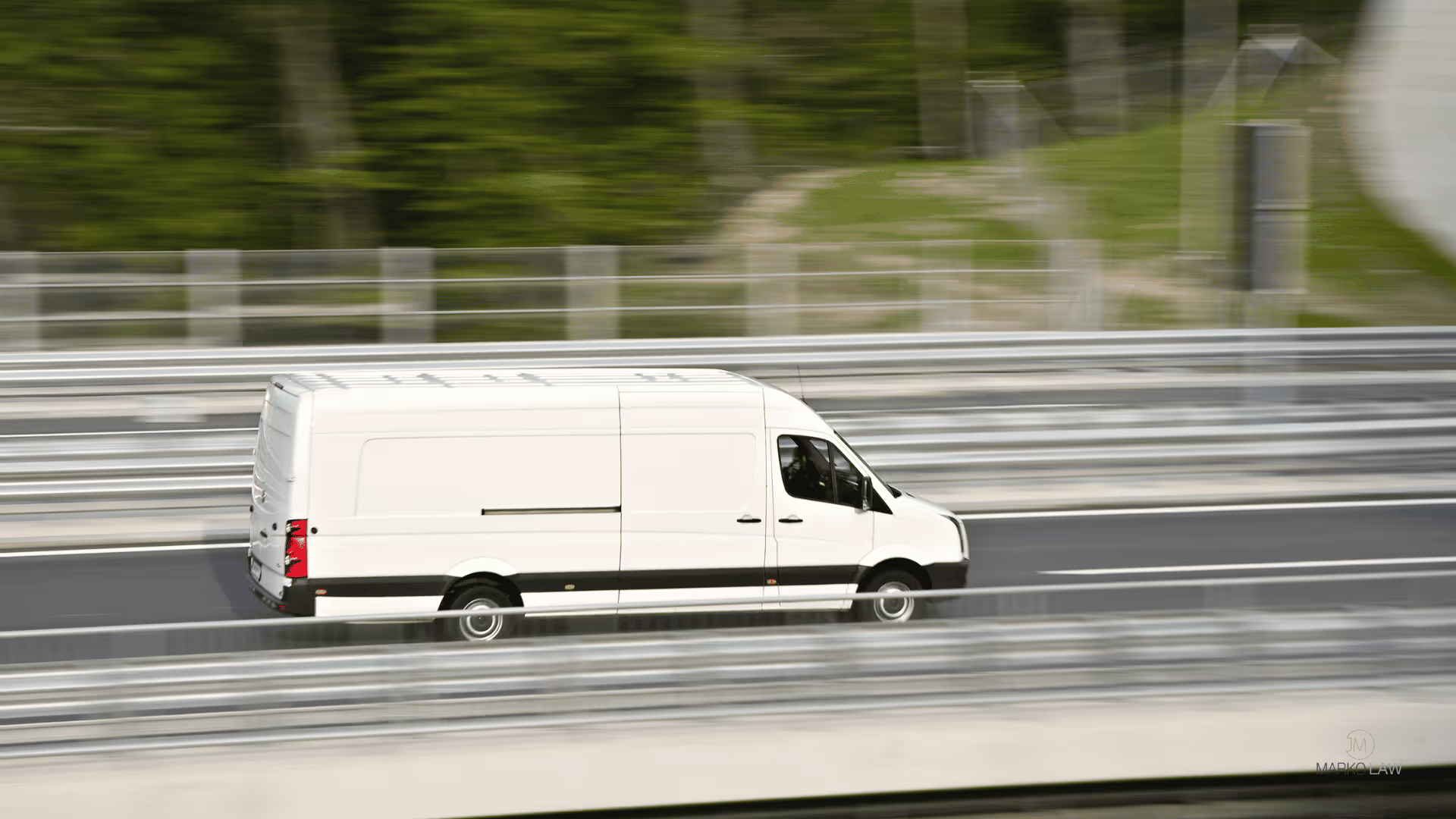
It’s everywhere now packages on doorsteps within hours, groceries arriving before dinner, and delivery vans constantly circling the block. The explosion of e-commerce and same-day delivery has fundamentally changed how we live. But behind that convenience is a growing danger many people don’t see until it’s too late.
Last-mile delivery vans those final-leg vehicles dropping packages at your home are flooding residential neighborhoods and already congested city streets. Quiet neighborhoods are now high-traffic delivery zones. Drivers are under pressure, streets are overcrowded, and safety is taking a back seat.
At Marko Law, we’re seeing the consequences firsthand. More crashes. More injuries. More lives disrupted all tied to a system that prioritizes speed over safety.
What Is “Last-Mile Delivery” and Why It Matters
Last-mile delivery refers to the final step in the shipping process—when a package travels from a local distribution hub directly to your doorstep. It’s the most time-sensitive and logistically complex part of the delivery chain.
And it’s growing fast.
Who’s Driving the Surge?
Major corporations and platforms are fueling this demand, including:
- Amazon and its vast network of independent delivery contractors
- FedEx and UPS expanding residential delivery routes
- Gig-based services like DoorDash, Instacart, and Uber Eats
These companies have reshaped expectations. Consumers now expect speed—and companies are racing to deliver it.
The Hidden Cost of Convenience
But that speed comes at a price:
- Drivers are pushed to meet unrealistic delivery quotas
- Routes are packed into tight time windows
- Residential streets are being treated like commercial delivery corridors
Neighborhoods not designed for constant commercial traffic are now overwhelmed. Double-parked vans, sudden stops, and rushed driving behaviors are becoming the norm—not the exception.
Why Last-Mile Delivery Vans Are More Dangerous
The rise in delivery van accidents isn’t random—it’s the result of a system built for speed, not safety. When companies prioritize faster delivery times over responsible operations, drivers are pushed into dangerous situations that put everyone on the road at risk.
Driver Fatigue and Unrealistic Quotas
Delivery drivers aren’t just driving they’re racing the clock all day long.
- Aggressive delivery quotas force drivers to complete dozens—sometimes hundreds—of stops per shift
- Long hours with minimal breaks leave little time for rest or recovery
- Constant pressure from dispatch systems tracks every second, every stop, every delay
Fatigue isn’t just about being tired it’s impairment.
- Slower reaction times
- Reduced awareness
- Increased likelihood of critical mistakes
And when a fatigued driver is behind the wheel of a commercial vehicle in a crowded neighborhood, the consequences can be devastating.
Distracted Driving
Last-mile delivery drivers operate in a constant state of distraction.
- GPS navigation systems updating routes in real time
- Delivery apps requiring confirmations, photos, and status updates
- Ongoing communication with dispatch or customers
This isn't an occasional distraction—it’s built into the job.
Drivers are expected to:
- Navigate unfamiliar streets
- Locate addresses quickly
- Monitor delivery schedules
- Communicate—all while driving
Frequent stops only make it worse. Each stop requires multitasking—checking packages, scanning items, planning the next move—often before the vehicle is even fully secured.
Inadequate Training and High Turnover
Many delivery drivers are thrown into high-risk roles with little preparation.
- Minimal onboarding or safety training
- Limited experience driving commercial-sized vehicles
- High turnover rates leading to a constantly inexperienced workforce
The gig economy model has changed the game:
- Speed and efficiency are prioritized over safety and skill
- Independent contractors may receive less training and oversight
- Companies can scale quickly—but without consistent accountability
The result? Drivers on the road who may not be fully equipped to handle the demands—or dangers—of the job.
Unsafe Driving Behaviors
When drivers are under pressure, corners get cut—and safety suffers.
Common behaviors we see in delivery-related crashes include:
- Double parking in active traffic lanes
- Sudden, unpredictable stops without warning
- Illegal turns or U-turns to save time
- Speeding to meet tight delivery windows
- Backing accidents in driveways and residential streets
These aren’t isolated mistakes. They’re patterns driven by unrealistic expectations and constant time pressure.
The Role of Corporate Negligence
Behind every delivery van is a company making decisions about speed, staffing, and safety. And too often, those decisions put profits over people.
Unrealistic Expectations from the Top
Delivery companies often:
- Set unattainable performance metrics
- Monitor drivers with strict time tracking systems
- Penalize delays—regardless of safety conditions
This creates a system where drivers feel forced to choose between doing the job safely or keeping their job at all.
Failure to Vet, Train, and Supervise
Companies have a responsibility to ensure their drivers are qualified and safe. But in many cases:
- Background checks may be insufficient
- Training programs are rushed or minimal
- Ongoing supervision is limited or reactive
When companies fail to invest in proper safety measures, the risk shifts to the public.
Independent Contractors and Avoiding Liability
Many delivery companies classify drivers as independent contractors. On paper, this can distance the company from liability—but reality is more complicated.
Even when drivers are contractors, companies may still control:
- Delivery routes
- Schedules and quotas
- Performance expectations
And that level of control matters.
Respondeat Superior and Corporate Accountability
Under the legal doctrine of respondeat superior, an employer can be held responsible for the actions of its employees when those actions occur within the scope of employment.
Even in contractor scenarios, companies may still be liable when:
- They exercise significant control over the driver’s work
- They fail to enforce safety standards
- They knowingly create dangerous working conditions
In other words—companies can’t always hide behind contractor labels when their business model contributes to unsafe roads.
Federal Oversight and Safety Violations
When delivery companies put more vehicles on the road, federal regulators step in to monitor safety. But oversight only works when companies follow the rules—and too often, they don’t.
The Role of the FMCSA
The Federal Motor Carrier Safety Administration (FMCSA) is the agency responsible for reducing crashes, injuries, and fatalities involving commercial vehicles.
They do this by:
- Enforcing federal safety regulations
- Conducting inspections and investigations
- Tracking safety performance across commercial fleets
For last-mile delivery operations, this oversight is critical. These vehicles may not look like traditional semi-trucks—but they are still part of a regulated system when used for commercial transport.
Understanding the Safety Measurement System (SMS)
The FMCSA uses the Safety Measurement System (SMS) to identify high-risk carriers and prioritize enforcement.
This system tracks key safety categories, including:
- Unsafe driving behaviors (speeding, reckless driving)
- Driver fatigue and hours-of-service compliance
- Vehicle maintenance issues
- Crash history and patterns
When a company’s safety data shows repeated issues, it can trigger warnings, audits, or deeper investigations.
Common Violations Linked to Delivery Fleets
Delivery fleets especially those operating under tight deadlines often show patterns of safety violations:
- Hours-of-service violations
- Drivers exceeding legal driving limits
- Skipping required rest breaks
- Vehicle maintenance failures
- Worn brakes, faulty lights, unsafe tires
- Failure to properly inspect and repair vehicles
- Driver fitness issues
- Inadequate training or qualifications
- Medical or licensing deficiencies
These aren’t minor technicalities—they directly impact whether a driver can operate safely on the road.
How Safety Scores Predict Crash Risk
FMCSA data shows a clear trend: companies with poor safety scores are more likely to be involved in future crashes.
- Carriers flagged for violations have higher crash rates
- Repeated violations signal systemic safety failures
- Lack of intervention allows dangerous patterns to continue
In other words, the warning signs are often there long before a crash happens.
At Marko Law, we know how to uncover these records—and use them to hold negligent companies accountable.
Delivery Speed Should Never Come at the Cost of Safety
What used to be a convenience has quietly become a crisis. Neighborhoods across Michigan—and the country—are absorbing the impact of a delivery system pushed to its limits. More vans. More pressure. More preventable accidents.
And it’s not corporations paying the price—it’s everyday people.
It’s the family dealing with mounting medical bills after a crash.
It’s the worker who can’t return to their job.
It’s the life that changes in an instant because someone was rushing to meet a delivery deadline.
This isn’t just about traffic. It’s about accountability.
Because until companies are held responsible for the systems they create—the quotas, the pressure, the lack of oversight—these accidents will keep happening.
At Marko Law, we fight hard—and we don’t back down. We stand with the people who’ve been hurt, and we take on the companies that put profits over safety.
Contact Marko Law for a Free Case Evaluation
If you or someone you love has been injured in an accident involving a delivery van, you don’t have to face this alone. You may be entitled to compensation—and we’re ready to fight for it.
At Marko Law, we hold negligent drivers and powerful corporations accountable. Our team has secured record-setting results and is prepared to take your case as far as it needs to go—because justice isn’t optional.
📞 Phone: +1-313-777-7777
📍 Main Office: 220 W. Congress, 4th Floor, Detroit, MI 48226
🌐 Website: https://www.markolaw.com/