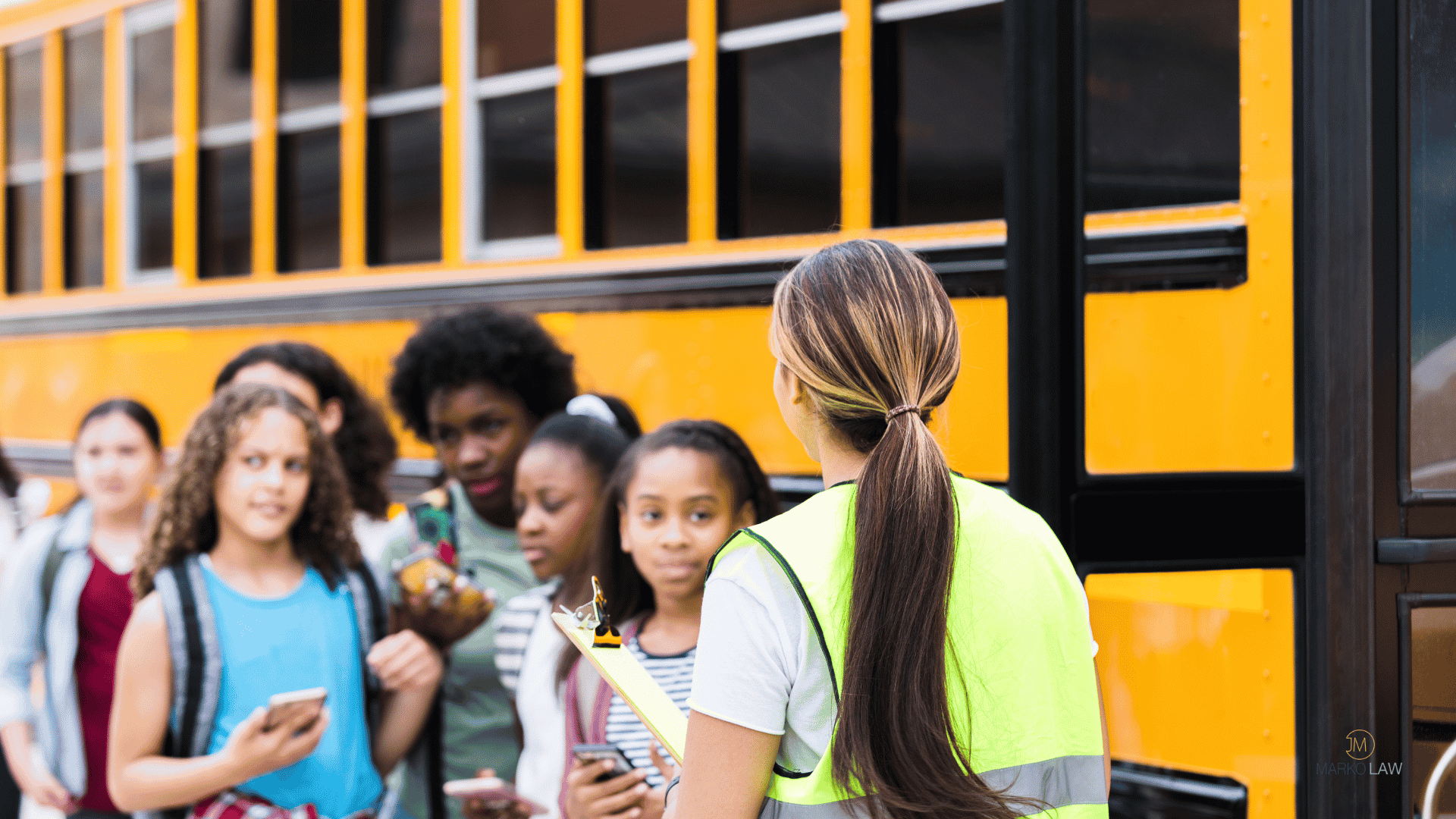
No parent sends their child off on a school field trip expecting a phone call that something went wrong. You signed the permission slip, packed the lunch, and trusted that the adults responsible for your child would bring them home safely. When that trust is broken, the grief and anger that follow are overwhelming. And underneath all of it is a question that will not go away: who is responsible for this?
Michigan law has an answer. Schools do not shed their legal obligations the moment students board a bus or walk through the gates of a museum. The duty to protect your child travels with them. And when that duty is breached, the families affected have legal rights worth fighting for.
The Legal Duty Schools Owe to Students
In Loco Parentis: What It Means and Why It Matters
The Latin phrase in loco parentis means "in the place of a parent." It is the legal doctrine that defines the relationship between a school and the students in its care. When children are at school or under school supervision, the school and its staff are expected to act as a reasonably prudent parent would in protecting those children from foreseeable harm.
This doctrine is not just a philosophical concept. It has direct legal consequences. It means that teachers, administrators, and other school personnel have an affirmative duty to supervise students, anticipate reasonable risks, and take action to prevent injury. When they fail to do that, the legal system holds them accountable.
How the Duty of Care Extends Beyond School Grounds
One of the most common misconceptions parents have after a field trip injury is that the school's legal responsibility somehow diminishes once students leave the building. This is not accurate under Michigan law. The duty of care that attaches when a child is placed under school supervision follows that child wherever the school takes them.
A field trip is a school-sanctioned activity. The school planned it, organized transportation, selected the destination, assigned supervision, and represented to parents that their children would be safe. Every one of those decisions carries legal responsibility. If any of those decisions were made carelessly or carried out negligently, the school may be liable for the consequences.
Who Can Be Held Liable for a Child's Injury?
The School District
In most field trip injury cases, the school district is the primary defendant. The district employed the teachers and staff who organized and supervised the trip, selected the destination, arranged transportation, and made every key decision that shaped the conditions under which the injury occurred. When any of those decisions reflected negligence or a failure to meet the applicable standard of care, the district may be held liable.
Individual Teachers and Chaperones
Beyond the district itself, individual teachers and chaperones who were directly responsible for supervising students may also face personal legal exposure in some circumstances. A teacher who abandoned their supervision duties, ignored a known risk, or made a specific decision that directly led to a child's injury may be named as a defendant alongside the school district.
Parent volunteers serving as chaperones occupy a somewhat different legal position than employed school staff, but they are not automatically immune from liability if their negligence contributed to a child's injury.
Third Party Venue Owners
As discussed above, the venue that hosted the field trip has its own independent duty of care to the children visiting its property. Under premises liability law, property owners and operators are required to maintain reasonably safe conditions for invited guests. When a child is injured because the venue failed to meet that standard, a claim against the venue owner may proceed separately from or alongside any claim against the school.
Transportation Companies and Vehicle Operators
If the injury occurred during transportation, the company that provided the vehicle and the driver who operated it may be liable under negligence or commercial transportation law. Claims against transportation contractors involve a different legal framework than claims against the school district and may include insurance coverage that significantly affects the potential recovery.
School Negligence Lawsuits and Michigan Law: What Parents Need to Know
How Negligence Law Applies to School Injury Cases
To succeed in a school negligence lawsuit in Michigan, a family generally must establish the same core elements required in any negligence claim:
- Duty: The school or responsible party owed a legal duty of care to the child
- Breach: That duty was violated through action or inaction
- Causation: The breach directly caused the child's injury
- Damages: The child suffered real, documentable harm as a result
The standard applied is what a reasonably prudent school, teacher, or supervisor would have done under the same circumstances. This standard accounts for the specific vulnerability of children and the heightened responsibility that comes with supervising minors in unfamiliar environments.
Governmental Immunity and Public Schools
Governmental immunity is the legal doctrine that protects Michigan public schools and school districts from many types of civil lawsuits. Because public schools are government entities, they receive a layer of legal protection that private institutions do not enjoy. For parents whose children attend public schools, this doctrine is one of the first hurdles an attorney must evaluate when assessing a potential claim.
However, governmental immunity is not a complete bar to recovery. Michigan's Government Tort Liability Act contains exceptions that allow lawsuits to proceed against public schools in specific circumstances. Navigating these exceptions requires careful legal analysis and is one of the most important reasons why working with a school injury lawyer in Michigan matters from the very beginning.
Exceptions That Open the Door to Lawsuits
Several recognized exceptions to governmental immunity may apply in field trip injury cases, including:
- The motor vehicle exception: Claims arising from the negligent operation of a government-owned vehicle, including a school bus, can proceed despite governmental immunity
- The public building exception: When a student is injured due to a dangerous or defective condition in a public school building or on school property, a claim may be possible under this exception
- Proprietary function exception: When a public school is engaged in an activity that is more commercial or proprietary in nature than governmental, immunity may not apply
- Individual employee liability: In some circumstances, individual school employees may be sued personally for gross negligence, which is defined as conduct so reckless as to demonstrate a substantial lack of concern for whether injury results
Statute of Limitations for School Injury Claims in Michigan
In Michigan, the general statute of limitations for personal injury claims is three years from the date of the injury. However, claims involving governmental entities like public school districts may involve shorter timeframes and additional procedural requirements that effectively compress the window for taking action.
For injured minors, Michigan law provides some extensions to the standard limitations period, but these protections have boundaries and should not be relied upon as a reason to delay seeking legal advice.
Notice Requirements: Critical and Time-Sensitive
Before filing a lawsuit against a Michigan governmental entity, including a public school district, a claimant is generally required to provide formal written notice of their intent to file a claim within a specific period. This notice requirement exists independently of the statute of limitations and failing to comply with it can result in a claim being dismissed regardless of its merits.
The notice requirement is one of the most time-sensitive and consequential procedural obligations in school injury cases. It is also one of the most commonly misunderstood. Parents who wait to consult an attorney sometimes discover that this window has already closed. Contacting a school injury lawyer in Michigan as soon as possible after your child is injured is the single most effective way to protect your family's legal rights.
Your Child Deserved Better. Let's Make It Right.
Your child was placed in the care of people whose job it was to keep them safe. That responsibility did not diminish because the day's activities happened off school grounds. When that responsibility was not honored and your child paid the price, you have every right to demand accountability.
Michigan law exists to protect children and the families who trust schools with their safety. But those protections only work when families understand their rights and act on them before critical deadlines pass and evidence disappears.
You should not have to fight this battle alone, and you should not have to navigate Michigan's complex school injury laws without experienced legal guidance in your corner. Your child deserved better. Now it is time to make sure the people responsible for what happened are held to account.
If you've been injured or your rights have been violated, you don't have to face this alone. Contact Marko Law today for a free case evaluation.
📞 +1-313-777-7777
📍 220 W. Congress, 4th Floor, Detroit, MI 48226
🌐 markolaw.com
At Marko Law, we fight hard — and we don't back down.