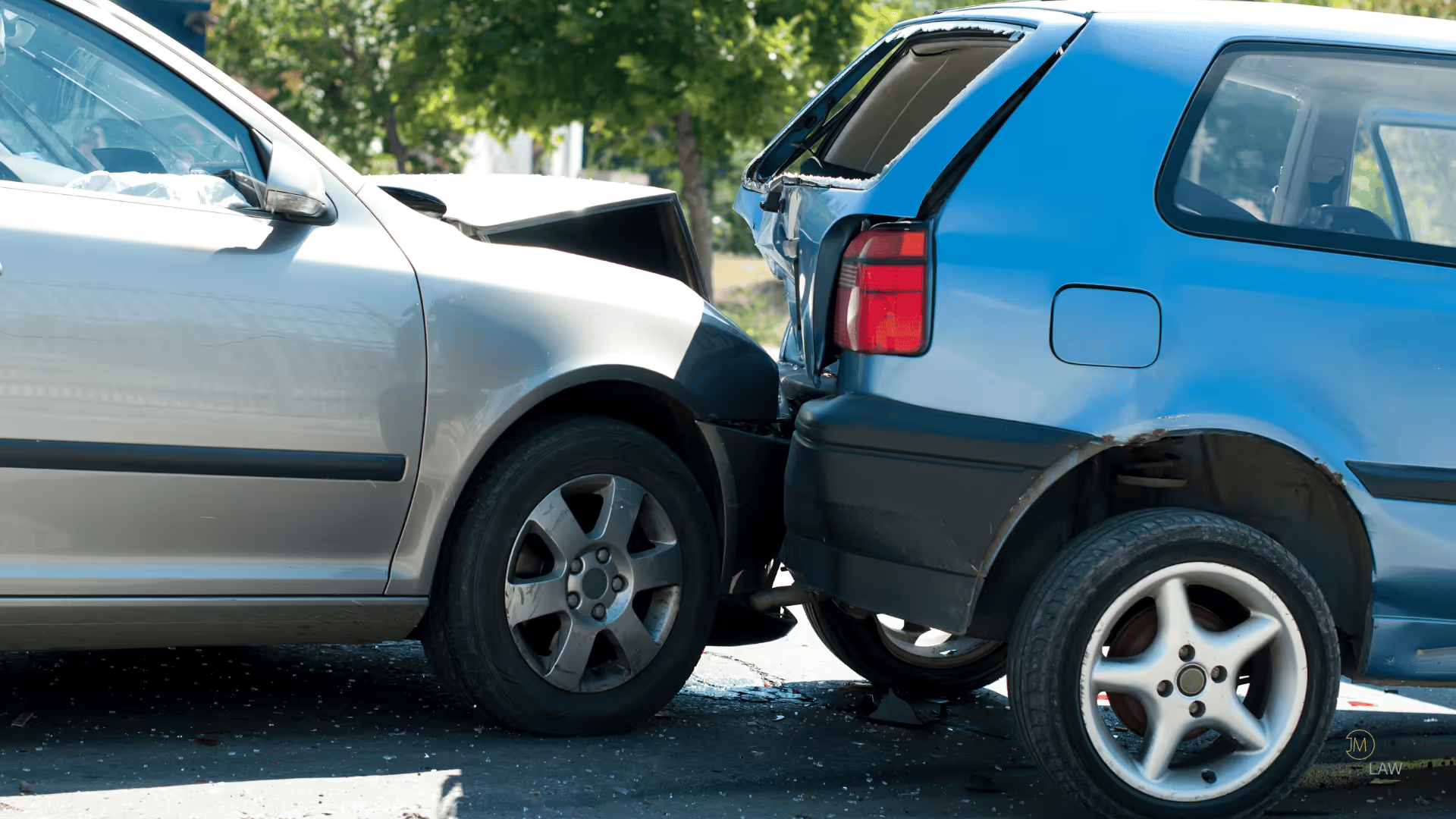
A chain-reaction crash is one of the most terrifying experiences a driver can face. In Michigan, where snow squalls, black ice, dense fog, and sudden whiteouts can blanket high-speed highways in seconds, these collisions often erupt without warning. One moment the road seems clear—then brake lights appear, metal twists, and multiple impacts unfold before you can even process what’s happening.
Here’s the truth: determining liability in a Michigan pile-up is complicated, and insurance companies know it. They often rush to blame innocent drivers, deny responsibility, or shift fault to avoid paying what victims deserve. These cases require deep investigation, reconstruction experts, and a law firm that understands multi-vehicle crash dynamics from the ground up.
At Marko Law, we’ve taken on negligent drivers, trucking companies, and insurance carriers in some of the toughest accident cases in Michigan. When someone’s careless driving—or a company’s failure to follow safety rules—sets off a devastating chain-reaction collision, we don’t back down. We stand up for the injured and fight for justice with everything we’ve got.
How Liability Is Determined in a Michigan Chain Reaction Crash
Michigan’s Negligence Principles
Michigan law requires every driver to operate their vehicle with reasonable care. That includes:
- Maintaining control of your vehicle
- Leaving enough following distance
- Adjusting speed for traffic, weather, and road conditions
In a pile-up, investigators look at whether each driver acted responsibly in the moments leading up to the crash. Snow, ice, or reduced visibility doesn’t excuse reckless behavior—drivers must adjust to conditions, not ignore them.
Comparative Fault
Michigan uses a comparative fault system. That means:
- More than one driver may share responsibility
- Fault is assigned as a percentage
- You can still recover damages even if you were partially at fault, as long as you weren’t more than 50% responsible for the crash
In a chain-reaction accident, comparative fault often plays a major role because each collision influences the next. Our job is to make sure your percentage of fault is fair—and not inflated by insurance companies trying to minimize payouts.
Rear-End Presumptions
In many accidents, the driver who rear-ends another is presumed negligent. But pile-ups are different.
Multiple impacts, sudden stops, and zero-visibility conditions can make it unclear who hit who first—or whether the rear-end driver had any realistic way to avoid the crash. Presumptions of negligence can shift, weaken, or disappear entirely once the full chain of events is examined.
This is why a detailed investigation is critical.
When a Single Driver Sets Off the Chain Reaction
Sometimes one driver’s negligence triggers the entire sequence. Examples include:
- A driver speeding too fast for conditions
- A distracted driver who slams into slowing traffic
- A truck driver who loses control because of worn brakes or fatigue
When one driver causes the first collision, they may be held responsible for the resulting chain of impacts—even those several cars behind. Their initial negligence sets off the “domino effect.”
When Multiple Drivers Contribute
In many Michigan pile-ups, more than one driver plays a role, such as:
- Drivers following too closely
- Drivers failing to brake in time
- Truck drivers not maintaining safe stopping distance
- Motorists making unsafe lane changes in heavy traffic
Untangling a multi-vehicle crash requires expertise, and that’s exactly what Marko Law brings to the table.
Potentially Liable Parties in a Chain Reaction Crash
The Initial Negligent Driver
Many pile-ups begin with one driver making one dangerous choice—and everything unravels from there. This may include:
- Speeding too fast for conditions
- Distracted driving (texting, calling, using GPS)
- Reckless maneuvers or sudden braking
When that first bad decision triggers the chain reaction, the initial negligent driver may be financially responsible for all resulting injuries and damage, even affecting vehicles several collisions removed from the first impact.
Drivers Who Fail to Brake or Maintain Distance
Michigan drivers have a legal duty to:
- Maintain a safe following distance
- Adjust speed for weather, traffic, and visibility
- Keep their vehicle under control
In a pile-up, drivers who were tailgating, speeding in hazardous conditions, or failing to brake appropriately may share responsibility for the expanding collision. Even if they weren’t the first impact, their negligence contributed to the chain reaction.
Commercial Truck Drivers and Trucking Companies
When a commercial vehicle is involved, the severity of a pile-up often increases dramatically. Truck drivers and their companies may be liable for:
- Poorly maintained brakes or tires
- Driver fatigue or hours-of-service violations
- Overloaded or improperly loaded trailers
- Not maintaining proper following distance
- Failing to slow down during Michigan’s severe weather
These cases often require immediate investigation into logbooks, maintenance records, and black box data—steps Marko Law takes quickly and aggressively.
Employers Under “Respondeat Superior”
When an employee causes a crash while on the job, the employer may also be legally responsible under the doctrine of respondeat superior.
This applies to:
- Delivery drivers
- Commercial truckers
- Rideshare or transportation workers
- Contractors acting within the scope of their work
Employer liability is critical because it opens the door to greater insurance coverage and compensation.
Government Entities (Rare but Possible)
While less common, government agencies may share responsibility if a pile-up was worsened or caused by:
- Dangerous road design
- Failure to remove snow or ice when required
- Missing or improper signage
- Poorly maintained intersections or highway structures
Claims against government entities require fast action due to short notice deadlines, and Marko Law is equipped to handle those complexities.
How Marko Law Investigates Pile-Up Crashes
Immediate Evidence Preservation
The first step is securing evidence before it disappears or is altered. We gather:
- Dashcam footage from involved vehicles
- Photos and videos from the scene
- Witness statements
- Debris patterns and impact points
- Event data recorder (black box) downloads
This evidence helps us reconstruct the chain of impacts and identify negligent drivers—or negligent companies—that triggered the crash.
Accident Reconstruction Experts
Chain reaction crashes often require expert analysis. We work with some of the best accident reconstruction specialists in Michigan to determine:
- The sequence of impacts
- The speed of each vehicle
- The distance between vehicles
- Whether a driver reacted too slowly
- Whether a truck’s braking system or load contributed to the collision
Having experts on board ensures we build a case rooted in science—not assumptions.
Subpoenaing Cell Phone Records
Distracted driving is one of the most common causes of pile-ups. When necessary, we subpoena:
- Phone call logs
- Text message activity
- App usage (GPS, social media, video streaming)
If a driver was texting, scrolling, or distracted moments before the crash, we prove it.
Weather and Road Condition Analysis
Michigan weather changes fast—and drivers must adjust accordingly. We analyze:
- Snowfall, ice, and visibility conditions
- Road maintenance or plowing patterns
- Whether drivers slowed appropriately
- Whether commercial drivers ignored safety protocols
Bad weather doesn’t excuse negligence. We show the difference between unavoidable weather conditions and reckless driving.
What to Do After You’re Involved in a Pile-Up
Call 911 and Seek Medical Care Immediately
Multi-impact collisions often cause injuries that aren’t immediately obvious, including:
- Concussions
- Internal injuries
- Back and spinal trauma
- Soft-tissue damage
Getting medical care protects both your health and your legal rights.
Document Everything
If you’re able, gather evidence while at the scene:
- Photos and videos
- Vehicle positions
- Skid marks and debris
- License plates of all involved vehicles
- Contact information for witnesses
This documentation becomes powerful proof during litigation.
Don’t Give Recorded Statements to Insurance Companies
Insurance adjusters often call within hours, pushing for a recorded statement. Don’t do it.
They are trained to:
- Twist your words
- Minimize your injuries
- Shift blame onto you
Let Marko Law handle those conversations. We protect you from tactics designed to weaken your claim.
Contact Marko Law Before Evidence Disappears
Evidence in a pile-up can vanish fast:
- Vehicles get moved
- Surveillance footage is overwritten
- Witnesses leave the scene
- Weather destroys tire marks and debris
The sooner you call us, the sooner we can preserve evidence, shut down insurance company pressure, and start building a strong case.
You Don’t Have to Take on a Pile-Up Case Alone
Unfair blame. Aggressive insurance companies. Conflicting stories from dozens of drivers. A pile-up crash can turn your world upside down in seconds—but you don’t have to navigate it alone.
If you were injured in a chain-reaction collision, Marko Law will stand up for you, uncover the truth, and fight for every dollar you deserve. These cases are complex, but your rights are not complicated: you deserve clarity. You deserve protection. You deserve justice.
You don’t have to take on the insurance companies by yourself. We’re here to make sure your voice is heard and your future is protected.
Contact Marko Law for a Free Case Evaluation
📞 Phone: +1-313-777-7777
📍 Main Office: 220 W. Congress, 4th Floor, Detroit, MI 48226
🌐 Website: https://www.markolaw.com/