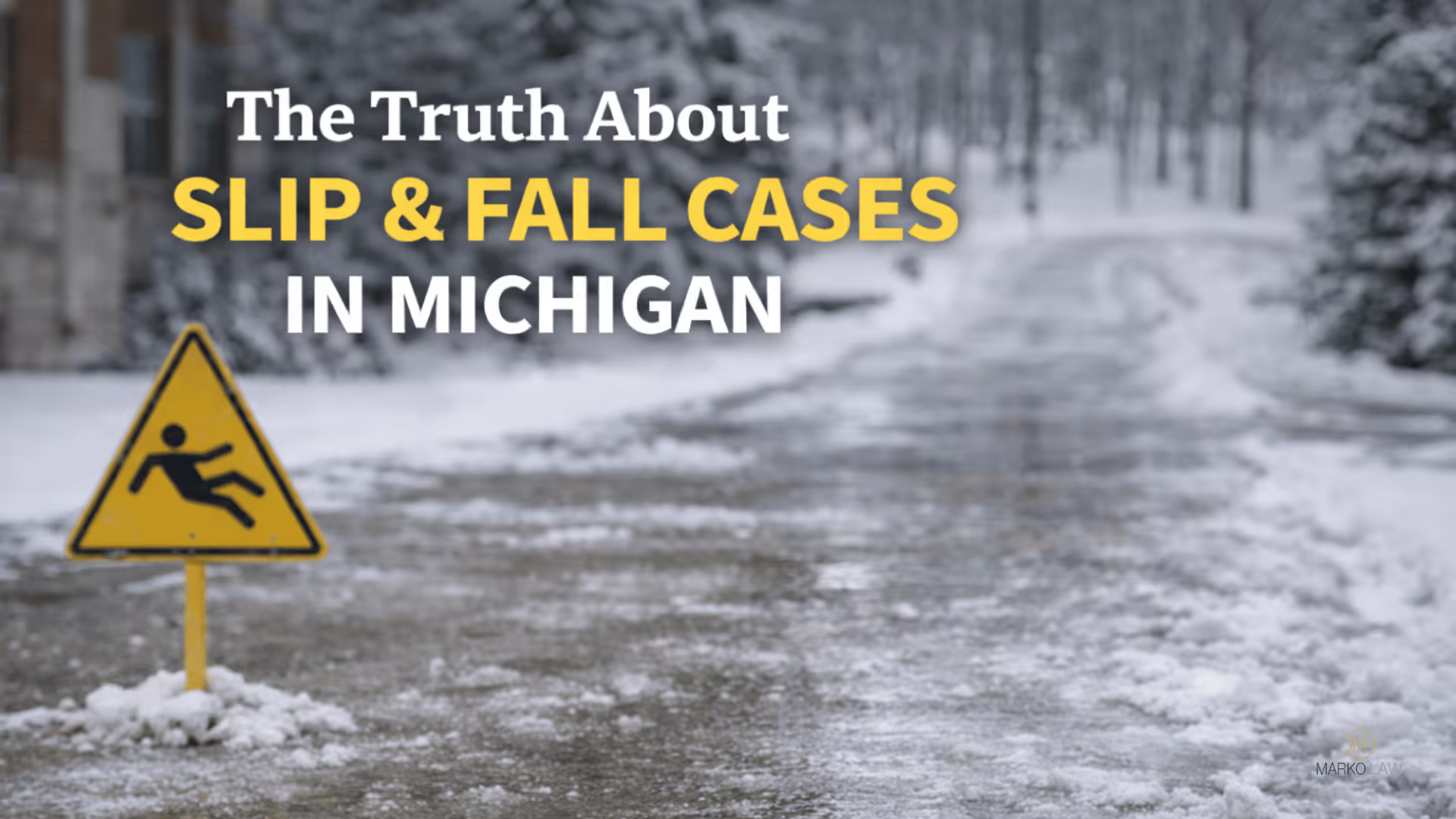
In Michigan, danger doesn’t take a season off. Icy sidewalks in winter, wet store floors year-round, crumbling stairs, uneven pavement, and unsafe work environments can turn an ordinary day into an injury claim in seconds. These hazards show up everywhere—apartment buildings, grocery stores, parking lots, restaurants, office buildings, and job sites.
Slip and fall injuries are also far more serious than most people realize. These falls can cause concussions, broken wrists and hips, torn ligaments, back injuries, and long-term mobility problems. What looks like “just a fall” in the moment can become months of treatment, missed work, and permanent limitations.
Michigan law still allows injured people to hold negligent property owners accountable. Understanding how the rules actually work can be the difference between getting brushed off and getting compensated fairly.
#1 If You Fall, It’s Automatically Your Fault
This is one of the first things insurance adjusters want you to believe. If they can get you thinking you “must’ve messed up,” they can discourage you from making a claim, or pressure you into accepting a low settlement before you understand what the property owner did wrong.
A fall can happen fast. That doesn’t mean it was inevitable, and it doesn’t mean the injured person caused it.
Michigan’s duty of care standard
Michigan premises liability law is built around reasonableness. People who possess or control property generally owe a duty to use reasonable care to protect invitees from an unreasonable risk of harm caused by a dangerous condition of the land. The practical issue is whether the property owner took reasonable steps to prevent injury—especially when the hazard was predictable, recurring, or known.
Unsafe conditions where owners can be liable
Property owners can be responsible when they fail to take reasonable steps to correct hazards or warn people. Examples that commonly come up in Michigan slip and fall cases include:
- Ice accumulation on stairs or walkways, especially in high-traffic areas or places tenants/customers must use
- Wet store floors without warning signs, like leaks, spills, or freshly mopped areas
- Uneven flooring or broken tiles, including buckled mats, torn carpet, or cracked pavement at entrances
- Poor lighting in hallways or parking lots, where visibility is reduced and hazards are harder to spot
#2 You Can’t Sue if the Ice or Hazard Was ‘Open and Obvious
For years, defendants leaned on a familiar line: if the danger was “open and obvious,” they owed no duty and the case should be dismissed. That approach let property owners turn a serious injury claim into a one-sentence defense.
What changed in 2023
In Kandil-Elsayed v. F & E Oil, Inc. (with the companion case Pinsky v. Kroger Co. of Michigan), the Michigan Supreme Court changed how courts analyze open-and-obvious hazards in premises liability cases.
The Court made clear that “open and obvious” should not be used as a shortcut to erase duty in the way older precedent allowed. The analysis is now more squarely focused on whether the property owner acted reasonably and whether the hazard was addressed in a reasonable way.
Visibility still matters, but it usually shows up in different parts of the case. After Kandil-Elsayed, whether a condition was open and obvious is generally treated as part of the breach and comparative fault analysis, not an automatic end to the lawsuit.
#3 Slip & Fall Cases Are Easy Money
Slip and fall cases are usually hard-fought. Businesses and landlords defend them aggressively because admitting fault can be expensive, and because these cases often come down to proof—proof that the hazard existed, proof it was there long enough to matter, proof that reasonable steps were not taken, and proof that the injuries are real and connected to the fall.
If you don’t have evidence, the defense will try to turn the claim into speculation.
What you have to prove to win
To establish negligence in a premises liability slip and fall case, the core elements usually include:
- The property owner/possessor owed a duty to maintain reasonably safe conditions
- The owner breached that duty through inaction, delayed action, or poor maintenance
- The dangerous condition caused the fall and injury (not guesswork, not assumptions)
- The injured person suffered damages, such as medical bills, lost wages, and pain and suffering
The evidence that makes or breaks a case
Strong slip and fall cases are built with documentation. That often includes:
- Photos/video of the hazard (including lighting, condition of the surface, warning signs)
- Weather reports and timing (in snow/ice cases)
- Incident reports from the business or property manager
- Medical records tying the fall to the diagnosis and treatment plan
- Witness statements from anyone who saw the condition or the fall
- Surveillance footage, if it exists and is preserved before it’s overwritten
#4 You Don’t Need a Lawyer for a Slip & Fall Claim
Insurance companies don’t approach slip and fall claims like a neutral referee. They use adjusters to shape the narrative early, then defense lawyers to attack liability, causation, and the value of the injury. Their playbook is consistent: push for quick statements, question the seriousness of the injury, and argue you caused your own fall.
What an experienced attorney actually does
A slip and fall case is usually won or lost on details that disappear fast. A lawyer helps by building the case before the defense can bury it.
- Investigates and preserves evidence early
- Demands surveillance footage before it’s overwritten
- Secures incident reports, witness info, and maintenance records
- Documents the hazard properly and ties it to a timeline
- Deals with the insurance company so you don’t get lowballed
- Adjusters often try to settle before you know the full medical picture
- A lawyer can slow that down, force a real evaluation, and stop “gotcha” recorded statements from becoming the center of the case
- Proves causation and fights comparative fault
- Defendants regularly argue: “That didn’t cause the injury,” or “You were careless.”
- A lawyer connects the fall to the medical diagnosis and pushes back when the defense tries to inflate your share of fault
- Values long-term damages
- Many injuries don’t end with the first ER visit. A serious claim accounts for ongoing treatment, work limits, and life impact—not just the first round of bills.
#5 You Won’t Get Much Money for a Slip & Fall
What compensation can include
The value of a slip and fall case depends on injury severity and how much it disrupts your life. Compensation can include:
- Medical expenses (current and future): ER care, imaging, surgery, PT/OT, medication, follow-ups, mobility aids
- Lost wages and loss of earning capacity: time missed, reduced hours, job limitations
- Pain and suffering: physical pain, ongoing symptoms, loss of mobility, sleep disruption
- Disability or disfigurement: lasting impairment, scarring, permanent restrictions
- Loss of quality of life: the activities and independence you can’t get back the same way
Comparative fault reduces damages, but doesn’t automatically erase a claim
Michigan uses comparative fault. If you’re found partially responsible, damages are reduced by your percentage of fault. If your percentage of fault is greater than the combined fault of the other parties, Michigan law bars noneconomic damages (like pain and suffering), while economic damages are reduced by your percentage.
Don’t Fall for the Myths—Fight for Your Rights
Slip and fall injuries are not minor events, and Michigan law does not treat them like they’re nothing. When a landlord, business, or property owner cuts corners on safety and someone gets hurt, the law can allow the injured person to pursue accountability and compensation. These cases are about preventable danger—conditions that should have been fixed, treated, blocked off, or clearly warned about.
Marko Law handles serious injury cases across Michigan, including slip and fall claims where property owners try to dodge responsibility. We move fast to preserve evidence, push back against blame-shifting, and demand a result that reflects the full impact of what you’ve been through.
Contact Marko Law for a Free Case Evaluation
📞 Phone: +1-313-777-7777
📍 Main Office: 220 W. Congress, 4th Floor, Detroit, MI 48226
🌐 Website: https://www.markolaw.com/