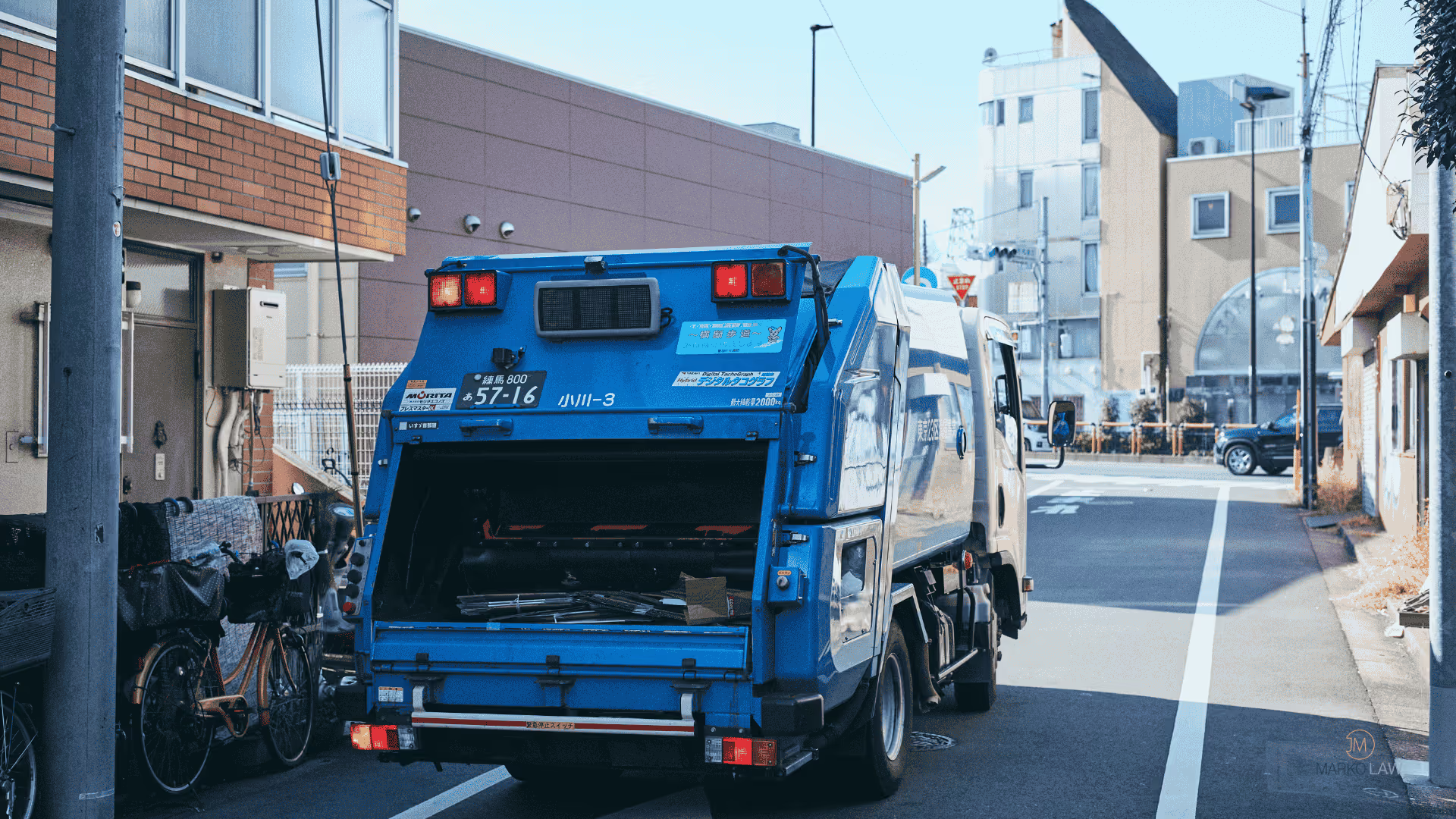
Garbage trucks are a familiar part of everyday life in residential neighborhoods. They roll through streets early in the morning, stopping at every home, collecting what we leave behind without a second thought.
But behind that routine is a serious and often overlooked danger.
These trucks operate on narrow streets, surrounded by parked cars, children heading to school, and pedestrians starting their day. They move in constant stop-and-go patterns, often in low visibility conditions, and share tight spaces with families who never expect a routine pickup to turn into a life-changing event.
What seems like just another part of the morning is, in reality, one of the most dangerous vehicles on neighborhood roads.
And as more accidents occur, more families are left asking: Why are garbage trucks involved in so many serious neighborhood crashes?
At Marko Law, we’ve seen the answer too many times—it’s not just the trucks themselves. It’s how, where, and under what conditions they operate.
The Unique Role of Garbage Trucks in Residential Areas
Constant Presence in Tight Spaces
Unlike delivery trucks or passing traffic, garbage trucks are deeply embedded in residential life.
They:
- Navigate tight, high-density streets not designed for large vehicles
- Operate inches away from parked cars, sidewalks, and homes
- Move slowly but unpredictably through areas filled with daily activity
This close proximity increases the risk of contact with pedestrians and other vehicles.
Frequent Stops at Nearly Every Home
Garbage trucks are constantly stopping sometimes every few seconds.
- Each stop creates a potential hazard point
- Drivers must repeatedly accelerate, brake, and reposition
- Other drivers may misjudge movements or attempt unsafe passing
This repetitive motion creates a pattern of unpredictability that raises the likelihood of accidents.
Interaction With Pedestrians and Cyclists
Neighborhoods are full of vulnerable road users.
- Children walking to school
- Residents taking out trash or checking mail
- Cyclists sharing narrow residential streets
Garbage trucks operate directly within these environments, increasing the chances of dangerous interactions.
Early Morning Operations and Limited Visibility
Most garbage collection happens early in the morning—before full daylight.
- Reduced visibility makes it harder to see pedestrians
- Drivers may be working at the start of long shifts
- Residents may not expect heavy vehicles moving through quiet streets
These conditions create a perfect storm for preventable accidents.
The Balance Between Efficiency and Safety
Sanitation routes are built for efficiency. Drivers are expected to complete routes quickly, often under strict timelines.
But when speed and efficiency take priority over safety, the margin for error disappears.
Common Causes of Garbage Truck Accidents
Driver Fatigue and Early Morning Routes
Most garbage truck routes begin before sunrise. While the streets may look quiet, the risks are already building.
Drivers often face:
- Long shifts that start in the early hours, disrupting natural sleep cycles
- Reduced alertness and slower reaction times during critical driving moments
- Pressure to complete routes quickly, pushing them to move faster than conditions allow
Fatigue doesn’t just make driving harder it makes it dangerous. In neighborhoods filled with pedestrians and children, even a slight delay in reaction can have devastating consequences.
Distracted Driving
Operating a garbage truck requires more than just driving it demands constant multitasking.
Drivers must:
- Manage vehicle controls and hydraulic systems
- Coordinate with crew members riding on or around the truck
- Navigate tight streets while monitoring surroundings
All of this happens at once.
In residential areas, where hazards can appear instantly, distraction becomes a serious liability. A moment of diverted attention is all it takes for a preventable accident to occur.
Unsafe Backing Practices
Backing up a garbage truck is one of the most dangerous maneuvers in any neighborhood.
These vehicles frequently need to reverse:
- In narrow streets or tight alleys
- Around parked cars and limited turning space
- In areas where visibility is already restricted
The risks are amplified by:
- Large blind spots behind the vehicle
- Lack of spotters to guide the driver
- Improper or inconsistent use of warning signals
When backing procedures aren’t followed precisely, the results can be catastrophic especially for pedestrians who may be completely out of view.
Poor Vehicle Maintenance
Garbage trucks endure intense daily use. Without proper maintenance, they become ticking time bombs on residential streets.
Common issues include:
- Brake failures that prevent timely stopping
- Hydraulic malfunctions affecting lifting and movement
- Mechanical defects caused by constant wear and tear
When companies fail to properly inspect and maintain these vehicles, they are knowingly putting unsafe equipment into neighborhoods filled with families.
Inadequate Training or Supervision
Garbage trucks are complex, heavy-duty machines that require skill and experience to operate safely. But in many cases, that training falls short.
Drivers may be:
- Operating without sufficient training for residential navigation
- Unprepared for the unique risks of pedestrian-heavy environments
- Working under companies that fail to enforce safety protocols
High turnover in sanitation roles—especially among contractors—can make this problem worse. New or undertrained drivers are placed in high-risk situations without the tools they need to keep others safe.
Governmental Liability and Michigan Law
When Municipal Services Are Involved
Many garbage trucks are owned or operated by local governments. This introduces governmental immunity, a legal doctrine that can limit lawsuits against public entities.
But immunity is not absolute.
Understanding Governmental Immunity—and Its Limits
Under Michigan law, municipalities are generally protected from liability while performing governmental functions. However, there are critical exceptions.
One of the most important applies directly to garbage truck accidents:
- Motor vehicle exception – If a government employee negligently operates a motor vehicle, the municipality may still be held liable
This means that if a garbage truck driver causes a crash through negligence, the city or agency may still be accountable.
Challenges in Pursuing Claims Against Public Entities
Even when exceptions apply, these cases are not easy.
Victims may face:
- Strict notice requirements with short deadlines
- Complex legal defenses raised by government entities
- Aggressive efforts to limit or deny liability
That’s why early action is critical.
At Marko Law, we understand how to navigate these barriers, uncover the truth, and pursue accountability—even when the defendant is a powerful public entity.
Types of Injuries Caused by Garbage Truck Accidents
Severe and Catastrophic Injuries
Garbage truck accidents commonly result in:
- Traumatic brain injuries (TBI) that impact memory, speech, and personality
- Spinal cord injuries, often leading to partial or complete paralysis
- Crush injuries and amputations caused by the immense weight of the vehicle
- Broken bones and internal injuries requiring multiple surgeries and long recovery periods
These injuries are not temporary setbacks. They fundamentally change how a person lives, works, and interacts with the world.
Wrongful Death and Irreplaceable Loss
In the most tragic cases, garbage truck accidents result in loss of life.
Families are left grieving loved ones taken far too soon—often in preventable circumstances. Michigan law allows families to pursue wrongful death claims, but no legal action can truly replace what was lost.
What it can do is demand accountability.
Long-Term Physical and Emotional Consequences
Even after the initial trauma, the impact continues.
Victims may face:
- Chronic pain and permanent disability
- Ongoing rehabilitation and medical care
- Emotional trauma, including anxiety, depression, and PTSD
These are lifelong consequences—and they deserve to be treated that way in any legal claim.
When Everyday Vehicles Become Extraordinary Dangers
Garbage trucks are part of everyday life. They move through neighborhoods so routinely that most people barely notice them. But beneath that routine is a serious and often underestimated threat one that becomes painfully clear when something goes wrong.
These vehicles operate in the very spaces families trust the most. Where children play. Where neighbors walk. Where life is supposed to feel safe.
And yet, when safety protocols are ignored, when training falls short, or when pressure outweighs caution, the consequences are not minor they are devastating.
Many of these accidents are not unavoidable. They are preventable. They stem from decisions, oversights, and failures that could and should have been addressed before anyone was harmed.
Every case is different. Speak to a lawyer to understand your rights.
Protect Your Family. Demand Accountability.
If you or a loved one has been injured in a garbage truck accident, you are facing more than just recovery—you are facing companies and municipalities already working to protect themselves.
At Marko Law, we fight hard—and we don’t back down.
📞 Phone: +1-313-777-7777
📍 Main Office: 220 W. Congress, 4th Floor, Detroit, MI 48226
🌐 Website: https://www.markolaw.com/