August 10, 2026
Ups and Downs: How to Navigate an Elevator Accident Lawsuit
Ups and Downs: How to Navigate an Elevator Accident Lawsuit - Learn about elevator malfunction lawsuit

Ups and Downs: How to Navigate an Elevator Accident Lawsuit - Learn about elevator malfunction lawsuit
An elevator malfunction lawsuit may be your most powerful legal option if you or someone you love was hurt when an elevator suddenly dropped, misleveled, or trapped you inside.
Here is a quick overview of what you need to know:
| Question | Quick Answer |
|---|---|
| Who can be sued? | Building owner, maintenance company, or manufacturer |
| What must you prove? | Negligence or a product defect caused your injury |
| What damages can you recover? | Medical bills, lost wages, pain and suffering |
| What is the key legal doctrine? | Res ipsa loquitur — the malfunction itself implies negligence |
| How long do you have to file? | Generally 3 years in Michigan (act fast — evidence disappears) |
Every day, more than 600 million people in the U.S. and Canada ride elevators without a second thought. That trust is reasonable. But when something goes wrong — a sudden drop, a door that opens to an empty shaft, a car that slams to a stop — the injuries can be catastrophic and life-altering.
Consider this: a 27-year-old stepped into what she believed was a waiting elevator. The doors opened. The cab was not there. She fell down the shaft and lost her leg above the knee. The building owner's insurance policy wasn't even enough to cover the full $3,975,000 settlement.
That is not a freak accident. That is negligence.
If you are reading this after being hurt — or after losing someone — you are probably overwhelmed, in pain, and unsure who is responsible or what comes next. This guide will walk you through exactly what an elevator malfunction lawsuit looks like, who can be held accountable, and how to protect your rights.
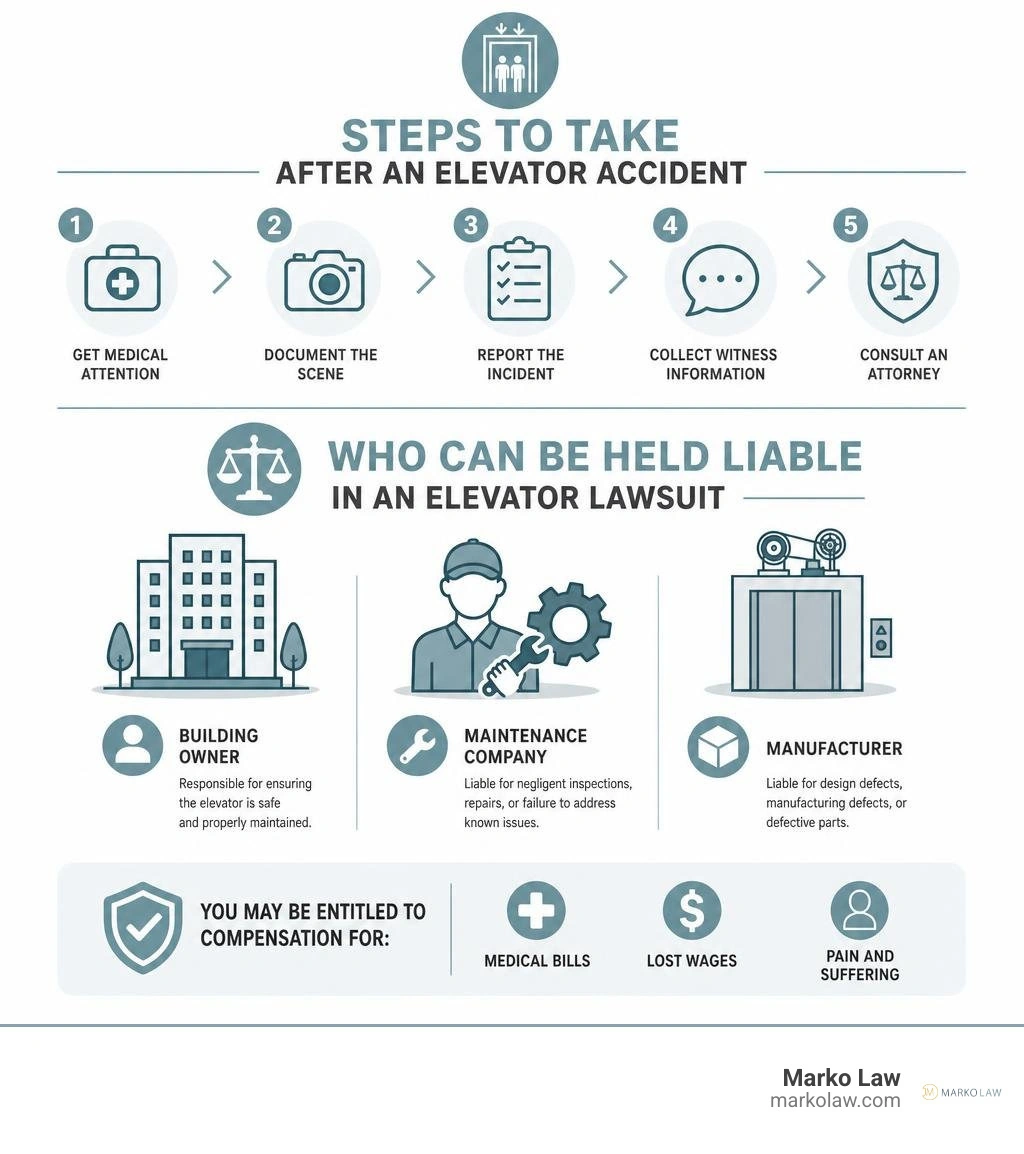
Elevators are incredibly complex machines. When they are designed, manufactured, installed, and maintained correctly, they are remarkably safe. But when a landlord or a maintenance company decides to cut corners to save a quick buck, these steel boxes become vertical hazards.

Understanding the root cause of the failure is the first step in building a successful elevator malfunction lawsuit. In our experience handling premises liability cases across Michigan—from Detroit to Grand Rapids—we see several recurring mechanical and electrical failures:
When these systems fail, the physical consequences are devastating. For a detailed breakdown of your rights after a building system failure, read our article on broken elevator broken bones. Additionally, major manufacturers are frequently targeted in these claims. For instance, a recent Otis Elevator Failure Lawsuit highlights how defective units can drop multiple floors, causing severe, permanent injuries to unsuspecting tenants.
While both passenger and freight elevators are designed to move things vertically, the legal and regulatory standards governing them are vastly different.
Passenger elevators are strictly regulated by the American Society of Mechanical Engineers (ASME) A17.1 Safety Code. Because they transport the general public, building owners and operators owe passengers a heightened standard of care. In many legal jurisdictions, passenger elevators are classified as "common carriers"—similar to buses or trains—meaning the operator must exercise the highest degree of care and vigilance to ensure safety.
Freight elevators, on the other hand, are primarily designed to carry cargo and authorized personnel. Because they are not open to the general public, the safety requirements under the ASME code are slightly different, and they do not always feature the same passenger-protective sensors. Unfortunately, this often leads to property managers taking maintenance shortcuts on cargo lifts.
If you are injured on a freight elevator as a worker, your claim may involve a combination of workers' compensation and a third-party premises liability lawsuit against the elevator maintenance company.
The human body is not built to withstand sudden vertical drops or heavy crushing forces. The injuries resulting from elevator failures are often severe, requiring extensive surgeries, physical therapy, and lifelong medical care.
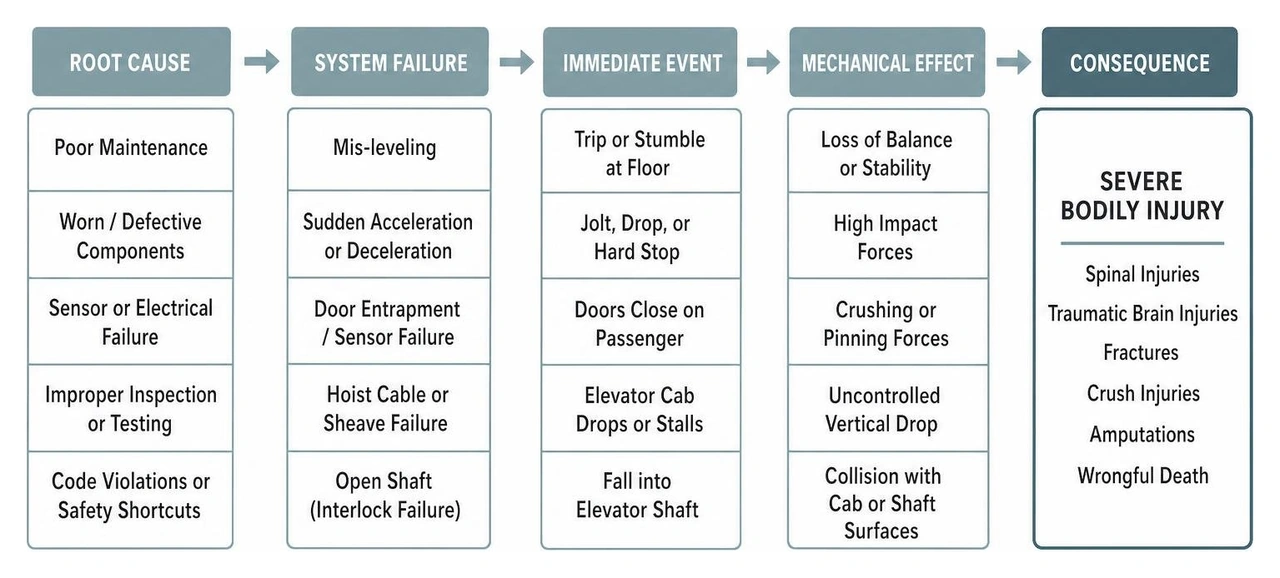
Some of the most common injuries we see include:
If you have suffered any of these injuries, you need to speak with a dedicated elevator fall injury lawyer who understands the medical and technical complexities of these cases.
When you are hurt in an elevator, the building owner's first reaction is almost always to point their finger at the elevator maintenance company. The maintenance company will then point their finger back at the building owner, or blame the manufacturer.
Our job is to cut through the finger-pointing and hold every negligent party accountable. Depending on the facts of your case, liability may fall on:
A major hurdle in these cases is the "prior notice" requirement. In the landmark case Hawkins v. K&D Mgt., L.L.C., the court ruled that general complaints about an elevator being "out of service" in the past are not enough to prove the landlord had notice of a specific mechanical defect that caused a sudden drop. This is why having an experienced legal team to dig up specific maintenance records is absolutely vital.
To win a traditional negligence claim, you must prove that the defendant had actual or constructive notice of the defect and failed to fix it.
Proving this requires diving deep into technical engineering. Elevator systems are beyond the common knowledge of the average juror. Therefore, courts require expert witness testimony to explain how complex components like commutators, hydraulic leveling valves, and motor limit timers work.
In Blasetti v. Schindler Elevator Corp., the court scrutinized the maintenance contractor's service logs, demonstrating how a failure to perform contractually mandated weekly checks allowed a dangerous mis-leveling condition to persist, ultimately proving the contractor's negligence.
What happens if you are hurt by an elevator malfunction, but the maintenance records are mysteriously missing or incomplete? This is where the legal doctrine of res ipsa loquitur ("the thing speaks for itself") can save your personal injury case.
Res ipsa loquitur allows a jury to infer negligence without direct proof of a specific maintenance breach, provided you can establish three elements:
For example, in Cynthia Proite v. Otis Worldwide Corporation, the court analyzed whether a hydraulic elevator mis-leveling by several inches could occur without negligence. While the defense argued that spontaneous power dips or sensor failures could cause mis-leveling even with perfect maintenance, a strong expert report demonstrating a lack of proactive valve testing allowed the plaintiff to push past summary judgment.
Similarly, the Michigan Court of Appeals addressed elevator maintenance liability in COA 364161 JOEL BOGORAD V OTIS ELEVATOR COMPANY Opinion , showing how critical the maintenance company's exclusive control is when evaluating a sudden malfunction.
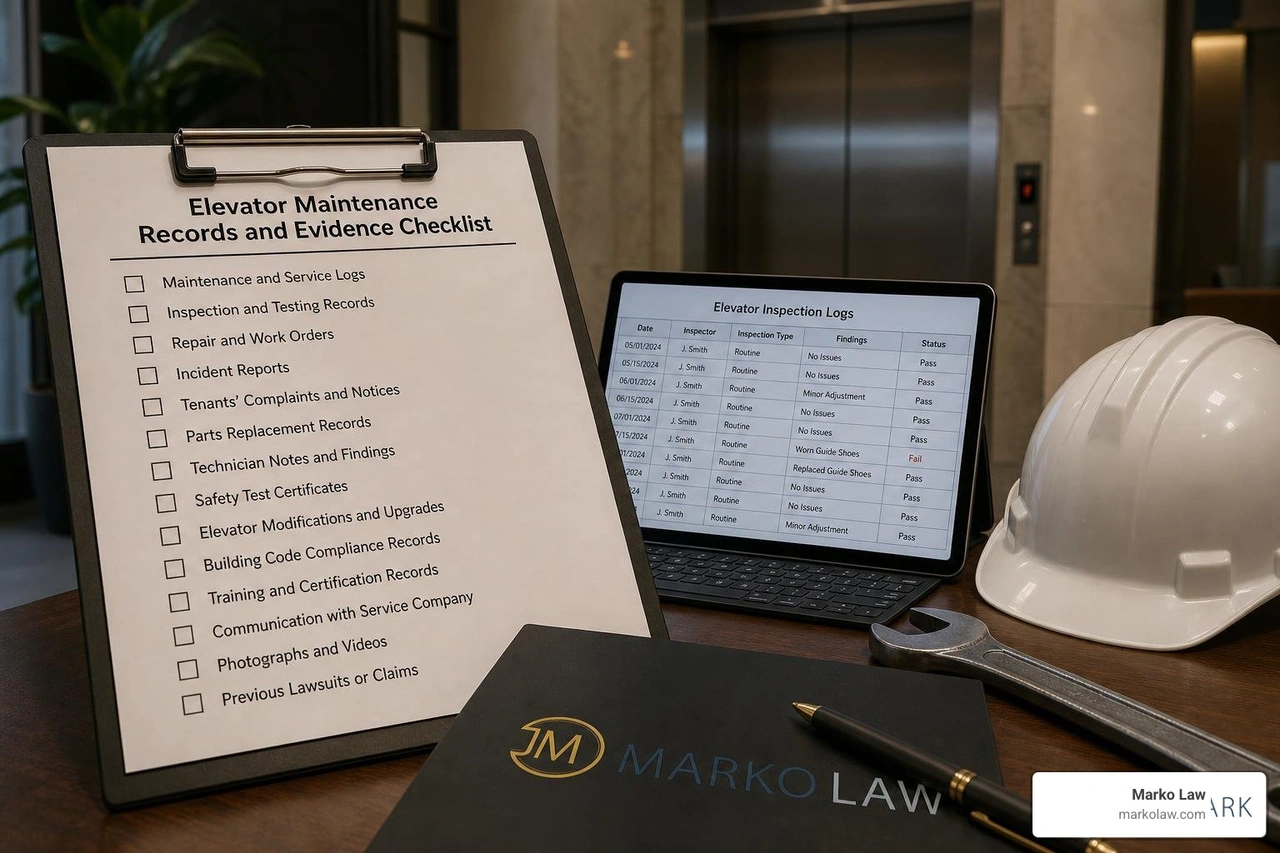
To secure the compensation you deserve, we must build an airtight case. This means gathering a mountain of technical and medical evidence before the defense has a chance to repair the elevator or delete security footage.
When you file a lawsuit, we seek recovery for both your economic and non-economic damages. For a comprehensive look at the compensation available, see our guide on what damages can I recover.
| Economic Damages (Objectively Verifiable) | Non-Economic Damages (Subjective, Intangible) |
|---|---|
| Past, present, and future medical bills | Physical pain and suffering |
| Rehabilitation and physical therapy costs | Emotional distress and mental anguish |
| Lost wages and missed work | Loss of enjoyment of life |
| Loss of future earning capacity | Permanent scarring or disfigurement |
| Cost of home modifications (wheelchair ramps) | Loss of consortium (impact on relationships) |
When we litigate an elevator case, we immediately issue a spoliation letter to prevent the destruction of evidence. We then demand the "Discovery Package," which typically includes:
If you are looking for local representation in Wayne, Oakland, or Macomb County, our detroit elevator escalator accident lawyer team is ready to step in and secure this evidence before it disappears.
Because elevator accidents often result in severe, permanent injuries, their settlement values and jury verdicts can be exceptionally high. Real-world cases from recent years demonstrate the significant compensation victims can recover:
Every case is unique. Your case's valuation will depend on the clarity of liability, the total cost of your medical treatment, your lost wages, and the long-term impact of the injury on your daily life.
First, seek medical attention immediately, even if you think your injuries are minor. Internal damage or spinal compression from rapid deceleration might not show symptoms until hours or days later.
Next, report the incident to the building management and demand that they write an official incident report—and make sure to take a photo of the completed report. Document the scene by taking photos and videos of the elevator's positioning, the unaligned floor, or any visible damage. Finally, contact a lawyer before speaking to any insurance adjusters. If the elevator was a defective product, check out our guide on what should I do if I am injured by a defective product.
In Michigan, the general statute of limitations for a personal injury or premises liability claim is three years from the date of the accident. You can find more details in our guide on how long do I have to file a personal injury claim in Michigan.
However, if your injury occurred in a public building (such as a state university, a municipal office, or a public hospital), you must file a formal Notice of Intent to sue within 120 days of the accident. Failing to meet this short deadline can completely bar you from recovering compensation, which is why you must act quickly.
Yes. In many elevator malfunction cases, we sue both the property owner (for failing to maintain safe premises) and the elevator maintenance company (for negligent repair and inspection).
This is known as joint and several liability or shared negligence. During the discovery process, we will examine the contract between the two parties to determine who bore the primary responsibility for the specific component that failed. To see if your situation qualifies for a lawsuit, read our article on how do I know if I have a personal injury case.
Elevator malfunctions are terrifying, and the legal battle that follows can feel just as overwhelming. Between complex engineering codes, tricky notice requirements, and aggressive insurance defense lawyers, trying to handle an elevator malfunction lawsuit on your own is a recipe for disaster.
At Marko Law, we have a proven track record of standing up to major property management groups, global elevator manufacturers, and their insurance companies. Our dedicated premises liability attorney team has recovered over $500 million for injured clients across Michigan, including Detroit, Dearborn, Warren, Sterling Heights, and Grand Rapids.
We work on a strict contingency fee basis—meaning you pay absolutely nothing out of pocket, and we don't get paid unless you win your case.
Don't let a landlord's laziness or a maintenance company's corner-cutting dictate your future. Contact Marko Law today to schedule your free, no-obligation consultation, and let us help you get your life back on track.
We Will Help You!
Get in touch with a real person 24/7/365.
If you’re a law firm owner and want help optimizing your practice for success, please email jon@markolaw.com

Real stories. Real results. From personal injury recoveries to civil rights victories, our clients trust Marko Law to deliver justice when it matters most. Hear what people across Michigan are saying about their experience with our legal team.

Big shoutout to the Marko Law squad. Gasper was an absolute assassin in the best possible way, and trust me, that's a high compliment coming from me. John Eads and Gasper tag-teamed those negotiations like champs. I'll be sending clients your way for the foreseeable future.
Alex Kay is absolutely a hell of a lawyer! He is compassionate and very thorough at his job! This process was a absolute breeze 🙌
I've been working with attorney Michael Jones for two years and couldn't have asked for a more dedicated attorney. He has never given up on my case and continues to fight hard to make sure justice is served. I highly recommend him to anyone who needs a lawyer who will stand by you.
Michael Jones and his team have been nothing but kind, courteous and very knowledgeable on any question I have had. They always answer my questions and walk me through the process. I would recommend Marko Law and Michael to anyone who needs an outstanding law firm.
From intake through the entire process, Michael Jones and his team have been doing an excellent job representing me. Their timely responses have given me true faith in their ability. I truly feel I could not be better represented anywhere else. Thank you, Michael and Dae!
Marko’s law firm truly has a great team ! Kyla in medical records is very comforting and pays great attention to detail!
I wanted to offer some positive feedback regarding Melody, who answers the phone. I found her to be very polite, cheerful and empathetic. She went above and beyond to make sure I could talk directly to the person who could best help me, and my issue was successfully resolved.
Marko Law is excellent! My case was handled very well. I appreciate the time Alex Kay spent to ensure I received the maximum payout, and his paralegal Tracey was great too. I recommend Alex Kay and Marko Law to everyone who needs a tried and trusted law firm!
Working with Marko Law Firm has been a superb experience! Alex Kay has done a phenomenal job handling my case, and his expertise has made a stressful situation feel much less daunting. He's been nothing but attentive and informative throughout the process.
Ariel Kellersohn is the best in the business. If you want a lawyer who dedicates herself to your case, you have found the right place. She upholds the highest standards of professionalism and is also very personable and easy to talk to. 10/10, if I could leave more than 5 stars I would!
Having Marko Law handle my case was the best decision I made. Alex Kay was excellent; he understood what I have been through and fought for me every step of the way. His dedication guided my case to a successful settlement. I would recommend them for any legal support you need.
What a fantastic experience I had working with the firm. You made me feel like you cared about me and not about making money. The communication was amazing, and you kept me informed on all aspects of my case. I would 100% recommend you and your firm.
They fight for the little guy. The process is generally hard, very hard, and mentally exhausting, but Marko and his phenomenal attorney Cait bring a lot of ease in that process. And WIN! Cait is straight up, honest of the risks and potential outcomes and such and fighter.
Great hard working firm that fights hard for their clients. Jon and his team are knowledgeable, dedicated and great people all around. Their results speak for themselves! Hire Marko!
John Marko handled my son's case wonderfully. He worked for us for 6 years to get my son the best settlement outcome. I highly recommend Marko Law.
I've been working here for three years and I can honestly say Jon Marko is a very passionate attorney with whom I'd trust a case with. He is honest, hard working and one of the smartest men I know. Wish I could give more than five stars!
Ernst and Marko is a firm that fights for the people. I have known Jon Marko for ten years and worked with him in civil litigation and an excessive force case. He is an aggressive and tireless advocate who fights for his clients to get them justice.
Marko Law exemplifies professionalism and diligence even in the most laborious cases. You truly feel protected and secure when handing Marko Law your vulnerability. They will always fight to protect your rights.
He was my attorney and couldn't of asked for a more aggressive and down to earth eager ATTORNEY! If you want a lawyer that will WIN then Jon Marko is the Man to call! I highly recommend him and we spoke whenever needed! Thank you again MARKO u were awesome:)
Thank you Jonathan Marko! You took my case and never let me down from day one! I recommend Marko Law; you will not regret it! Jonathan Marko is the most amazing Lawyer ever! The law firm is honest, fair, consistent, hard working and very nice! Thank you again!
Attorney Jon Marko is one of the finest attorneys I have ever had the opportunity to work with. His experience and calm courtroom demeanor leaves him unmatched, and makes him a truly aggressive advocate for his clients.
Marko Law is a breath of fresh air. They're responsive, they care and they get the job done. They have great communication which means you never feel out of the loop. Most of all they work hard until they get the outcome necessary. Love Marko and his team!
The Ernst and Marko Law firm has an amazing group of attorneys and staff that will make sure they give each and every client the personalized legal advice they need! They will fight for their clients to make justice is served! I highly recommend this firm!
I've know Jon Marko for years and he is simply the best. He has helped friends and family through tough times and I would trust him with any legal issue, considering that everyone I know that has hired him has had extremely favorable outcomes.
Jon Marko represented me in a lawsuit. He is extremely smart, hardworking, and dedicated to his clients. I'm an attorney myself so I understand what is required of an exceptional attorney. You will not be disappointed if you hire him and his firm to represent you!
The world needs more protectors like Jon Marko from police brutality. He was kind, generous, and reassuring when I spoke to him. Thank you for being a defender of the every man because it's the right thing to do.
Big shoutout to the Marko Law squad. Gasper was an absolute assassin in the best possible way, and trust me, that's a high compliment coming from me. John Eads and Gasper tag-teamed those negotiations like champs. I'll be sending clients your way for the foreseeable future.
Alex Kay is absolutely a hell of a lawyer! He is compassionate and very thorough at his job! This process was a absolute breeze 🙌
I've been working with attorney Michael Jones for two years and couldn't have asked for a more dedicated attorney. He has never given up on my case and continues to fight hard to make sure justice is served. I highly recommend him to anyone who needs a lawyer who will stand by you.
Michael Jones and his team have been nothing but kind, courteous and very knowledgeable on any question I have had. They always answer my questions and walk me through the process. I would recommend Marko Law and Michael to anyone who needs an outstanding law firm.
From intake through the entire process, Michael Jones and his team have been doing an excellent job representing me. Their timely responses have given me true faith in their ability. I truly feel I could not be better represented anywhere else. Thank you, Michael and Dae!
Marko’s law firm truly has a great team ! Kyla in medical records is very comforting and pays great attention to detail!
I wanted to offer some positive feedback regarding Melody, who answers the phone. I found her to be very polite, cheerful and empathetic. She went above and beyond to make sure I could talk directly to the person who could best help me, and my issue was successfully resolved.
Marko Law is excellent! My case was handled very well. I appreciate the time Alex Kay spent to ensure I received the maximum payout, and his paralegal Tracey was great too. I recommend Alex Kay and Marko Law to everyone who needs a tried and trusted law firm!
Working with Marko Law Firm has been a superb experience! Alex Kay has done a phenomenal job handling my case, and his expertise has made a stressful situation feel much less daunting. He's been nothing but attentive and informative throughout the process.
Ariel Kellersohn is the best in the business. If you want a lawyer who dedicates herself to your case, you have found the right place. She upholds the highest standards of professionalism and is also very personable and easy to talk to. 10/10, if I could leave more than 5 stars I would!
Having Marko Law handle my case was the best decision I made. Alex Kay was excellent; he understood what I have been through and fought for me every step of the way. His dedication guided my case to a successful settlement. I would recommend them for any legal support you need.
What a fantastic experience I had working with the firm. You made me feel like you cared about me and not about making money. The communication was amazing, and you kept me informed on all aspects of my case. I would 100% recommend you and your firm.
They fight for the little guy. The process is generally hard, very hard, and mentally exhausting, but Marko and his phenomenal attorney Cait bring a lot of ease in that process. And WIN! Cait is straight up, honest of the risks and potential outcomes and such and fighter.
Great hard working firm that fights hard for their clients. Jon and his team are knowledgeable, dedicated and great people all around. Their results speak for themselves! Hire Marko!
John Marko handled my son's case wonderfully. He worked for us for 6 years to get my son the best settlement outcome. I highly recommend Marko Law.
I've been working here for three years and I can honestly say Jon Marko is a very passionate attorney with whom I'd trust a case with. He is honest, hard working and one of the smartest men I know. Wish I could give more than five stars!
Ernst and Marko is a firm that fights for the people. I have known Jon Marko for ten years and worked with him in civil litigation and an excessive force case. He is an aggressive and tireless advocate who fights for his clients to get them justice.
Marko Law exemplifies professionalism and diligence even in the most laborious cases. You truly feel protected and secure when handing Marko Law your vulnerability. They will always fight to protect your rights.
He was my attorney and couldn't of asked for a more aggressive and down to earth eager ATTORNEY! If you want a lawyer that will WIN then Jon Marko is the Man to call! I highly recommend him and we spoke whenever needed! Thank you again MARKO u were awesome:)
Thank you Jonathan Marko! You took my case and never let me down from day one! I recommend Marko Law; you will not regret it! Jonathan Marko is the most amazing Lawyer ever! The law firm is honest, fair, consistent, hard working and very nice! Thank you again!
Attorney Jon Marko is one of the finest attorneys I have ever had the opportunity to work with. His experience and calm courtroom demeanor leaves him unmatched, and makes him a truly aggressive advocate for his clients.
Marko Law is a breath of fresh air. They're responsive, they care and they get the job done. They have great communication which means you never feel out of the loop. Most of all they work hard until they get the outcome necessary. Love Marko and his team!
The Ernst and Marko Law firm has an amazing group of attorneys and staff that will make sure they give each and every client the personalized legal advice they need! They will fight for their clients to make justice is served! I highly recommend this firm!
I've know Jon Marko for years and he is simply the best. He has helped friends and family through tough times and I would trust him with any legal issue, considering that everyone I know that has hired him has had extremely favorable outcomes.
Jon Marko represented me in a lawsuit. He is extremely smart, hardworking, and dedicated to his clients. I'm an attorney myself so I understand what is required of an exceptional attorney. You will not be disappointed if you hire him and his firm to represent you!
The world needs more protectors like Jon Marko from police brutality. He was kind, generous, and reassuring when I spoke to him. Thank you for being a defender of the every man because it's the right thing to do.
At Marko Law, we don’t just take cases. we take a stand. Whether you're facing an injury, injustice, or outright negligence, our team fights like it’s personal, because to you, it is.
Ready to make your voice heard?
We’re not here to play games. We’re here to win.